Flea Control — Connect to a Licensed Local Flea exterminator
Flea infestations multiply fast and spread across the entire home — eggs and larvae embed in carpet fibers, upholstery, pet bedding, and yard soil long before adult fleas are visible on pets. Licensed local operators apply professional Insect Growth Regulators (IGRs) plus adulticides across all four life stages (eggs, larvae, pupae, adults) for elimination DIY treatments rarely achieve.
Pets scratching constantly, flea bites on ankles, flea dirt in pet bedding? Call now — every day delays elimination by 2-3 weeks because pupae stages are insecticide-resistant.
Free referral — calls connect to a licensed local provider.
- Licensed local operators
- Free inspection
- Available 24/7
- No obligation
How it works
- 1
Call now
Talk to a local licensed technician — no menus, no hold music.
- 2
Free inspection
Honest assessment of what you're dealing with and what treatment fits.
- 3
Fast scheduling
Most appointments confirmed within 24 hours; same-day available when operators have capacity.
Why call us for flea control?
Local technicians
Licensed pros who know your area's homes and which flea species are most active locally.
Free inspection
No-cost, no-obligation home assessment. You see exactly what's going on before any treatment is scheduled.
Fast scheduling
Most appointments confirmed within 24 hours. Same-day often available depending on operator capacity in your area.
Treatment guarantees
If the problem returns inside the warranty period, your provider re-treats at no charge.
Why this matters
The cost of waiting on fleas
Flea infestations multiply fast and spread across the entire home — eggs and larvae embed in carpet fibers, upholstery, pet bedding, and yard soil long before adult fleas are visible on pets. Licensed local operators apply professional Insect Growth Regulators (IGRs) plus adulticides across all four life stages (eggs, larvae, pupae, adults) for elimination DIY treatments rarely achieve.
Pets scratching constantly, flea bites on ankles, flea dirt in pet bedding? Call now — every day delays elimination by 2-3 weeks because pupae stages are insecticide-resistant.
Free referral — calls connect to a licensed local provider.
- Flea allergy dermatitis is the most common skin disease in US dogs and cats
- Heavy flea infestations cause anemia in puppies, kittens, and small pets
- Fleas transmit tapeworm (Dipylidium caninum), Bartonella (cat-scratch disease), and historically plague (Yersinia pestis)
- Adult fleas are only ~5% of an infestation — eggs, larvae, and pupae embedded in carpet and yard make up the other 95%
Reference: CDC: About Fleas (U.S. Centers for Disease Control and Prevention).
Flea Control services
Licensed local operators handle every common flea situation, from quick spot treatments to full-home elimination programs.
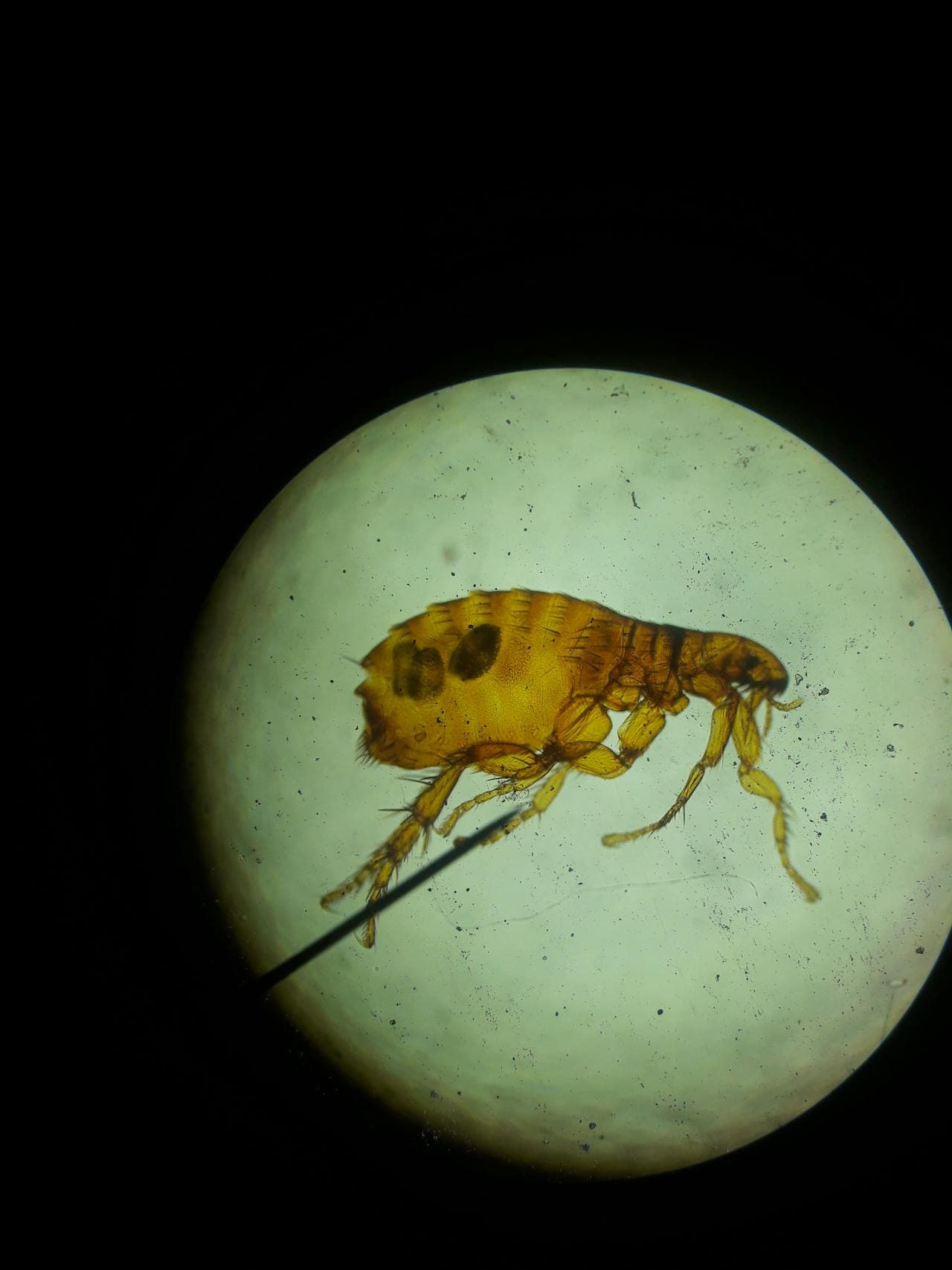
Flea Control
Flea infestations multiply fast and spread across the entire home — eggs and larvae embed in carpet fibers, upholstery, pet bedding, and yard soil long before adult fleas are visible on pets. Licensed local operators apply professional Insect Growth Regulators (IGRs) plus adulticides across all four life stages (eggs, larvae, pupae, adults) for elimination DIY treatments rarely achieve.
Common species treated
- Cat flea (Ctenocephalides felis) — dominant US species, ~95% of residential infestations
- Dog flea (Ctenocephalides canis) — less common in US than the name suggests
- Human flea (Pulex irritans) — rare in US, occasional in rural and wildlife-adjacent properties
- Sticktight flea (Echidnophaga gallinacea) — poultry, livestock, and wildlife exposure
Starting price
Starts as low as
$99
for initial flea treatment
Final cost depends on home size, infestation severity, and treatment method. Free inspection determines exact pricing — no obligation to book. See FAQ below for details.
Flea infestations are deceiving. By the time you see adult fleas on a pet, the home already contains 10-20 times that population in eggs, larvae, and pupae embedded in carpet fibers, upholstery seams, pet bedding, and yard soil. The visible adults are roughly 5% of the total — the other 95% are life stages most over-the-counter products do not effectively reach. Cat fleas (Ctenocephalides felis) account for an estimated 95% of US residential flea infestations regardless of which pet they're on, and the species reproduces fast enough that a delay of two to three weeks between treatment rounds can fully reset the population. Licensed local operators apply professional Insect Growth Regulators (IGRs) plus adulticides across the full life cycle and coordinate with veterinary treatment of pets to break the cycle for good.
What fleas are and what species you're actually dealing with
Despite the name, the cat flea (Ctenocephalides felis) is the dominant flea species across virtually every US residential infestation — roughly 95% — regardless of whether the pet is a cat, a dog, or whether there's no pet at all and the source is wildlife. Cat fleas readily feed on dogs, cats, humans, rabbits, opossums, raccoons, and feral cats; the species name reflects original taxonomic description, not host preference. Adult cat fleas are 1/16 to 1/8 inch long, dark reddish-brown, laterally flattened (so they slip easily through fur), wingless, and equipped with powerful hind legs that allow them to jump 100+ times their body length. Females begin producing eggs within 24-48 hours of their first blood meal and can lay 40-50 eggs per day for months. The eggs fall off the host into carpet, bedding, upholstery, and yard soil where they hatch into larvae, then pupate, then emerge as new adults — meaning the infestation is distributed across the home environment, not concentrated on the pet.
Why fleas need professional treatment (the lifecycle problem)
Fleas have four life stages — eggs, larvae, pupae, and adults — and over-the-counter foggers and sprays target only the adult stage. The reason DIY treatments routinely fail is the pupae. Flea pupae are encased in a sticky silk cocoon that picks up environmental debris (lint, sand, pet hair) and is functionally insecticide-resistant — applied chemicals do not reliably penetrate the cocoon. Pupae can remain dormant in carpet and floor cracks for weeks to months, only emerging when triggered by warmth, vibration, and CO2 (a homeowner walking across the carpet, or a pet returning to a treated room). A homeowner who treats with an OTC fogger, sees adult activity drop, and assumes the problem is solved is typically experiencing the lull between treatment and the next pupal hatch wave 10-14 days later. Professional treatment uses Insect Growth Regulators (IGRs) like methoprene or pyriproxyfen that disrupt egg and larval development, combined with longer-residual adulticides — the IGR component is the load-bearing piece OTC products typically lack at effective concentrations.
How professional flea treatment works
Effective flea elimination is a coordinated three-part program. First, inspection: the operator identifies harborage zones (carpet edges, upholstery seams, pet sleeping areas, yard zones the pet frequents), confirms species, and assesses severity. Second, interior treatment combining an IGR and an adulticide applied to floors, baseboards, upholstery, and all soft furnishings the pet contacts. Heavy carpet treatment requires the homeowner to vacuum aggressively before treatment (vibration triggers pupae to emerge, which makes them vulnerable) and to dispose of the vacuum bag immediately. Third, exterior yard treatment in shaded areas where pets rest, dogs trail through grass, and wildlife travel paths cross — sun-exposed areas don't sustain flea populations because UV kills eggs, but shaded zones (under decks, around shrubs, in dog runs) maintain breeding populations. Most operators schedule a follow-up treatment 10-14 days after the initial visit to catch the pupal-emergence wave that the first treatment doesn't reach. Pet treatment by a veterinarian must happen alongside home treatment — pest control operators do not apply products directly to animals, and home treatment alone with untreated pets cycles the population back within weeks.
Why pet households are at highest risk (more than climate)
Flea pressure correlates more strongly with pet density and outdoor access than with regional climate. A household with two dogs that walk daily on a tree-lined trail will run higher flea risk than a no-pet household in a humid Gulf Coast city — the host availability and the trail-access cycling matter more than ambient temperature. Three drivers concentrate residential flea pressure: dog parks and off-leash areas where multiple dogs share grass, urban trail systems (the Atlanta Beltline, Charlotte greenways, San Diego coastal paths) where wildlife and pets cycle through the same shaded vegetation, and wildlife reservoirs — opossums, raccoons, feral cats, and rodents that maintain feral flea populations independent of household pet treatment. Cities with rapidly expanding intown trail networks have seen residential flea calls climb in step with trail mileage. This is why flea elimination requires home treatment plus yard treatment plus pet treatment plus, ideally, exclusion of wildlife harborage near the property.
Talk to a flea exterminator now
Free inspection, no obligation. Operators answering 24/7.
Free referral — calls connect to a licensed local provider.
Seasonal patterns and indoor year-round pressure
Outdoor flea activity peaks May through September across most of the US, when temperatures stay between 65°F and 85°F and relative humidity supports egg and larval development. In subtropical and Gulf Coast cities — Houston, Jacksonville, San Antonio, the Texas Triangle — outdoor flea pressure runs nearly year-round because winter temperatures rarely fall below the development threshold. In northern and high-altitude markets, outdoor flea pressure drops sharply October through April. But indoor flea pressure runs year-round in every climate. Home heating maintains 65-75°F across the cold months, which is squarely inside the flea's preferred temperature range, and indoor pets carrying eggs from late-season outdoor exposure seed the carpet for winter hatching. The most common scenario homeowners encounter is a January or February flea outbreak that traces back to October egg laying — the pupal stage held the population in suspended animation through the cold weeks until home heating triggered emergence. Recurring quarterly service plans that include flea coverage are significantly more reliable than reactive one-time treatments for households with pets.
Common flea species we treat in residential pest control
Cat flea (Ctenocephalides felis) is the species behind the overwhelming majority of US residential flea calls — roughly 95% of infestations regardless of the host pet, regardless of whether the property has cats, dogs, or no pets. Dog flea (Ctenocephalides canis) is morphologically very similar to cat flea but is far less common in the US than its name suggests; reliable identification requires microscopic examination of the head profile and genal/pronotal combs. Most DIY identifications of "dog fleas" turn out to be cat fleas under inspection. Human flea (Pulex irritans) is rare in modern US residential pest control — it persists in some agricultural and wildlife-adjacent rural settings but is largely absent from typical suburban infestations. Sticktight flea (Echidnophaga gallinacea) attaches firmly to a host (rather than free-jumping like cat fleas) and is associated with poultry, livestock, and wildlife exposure — a typical case is a homeowner who keeps backyard chickens or whose property abuts wildlife corridors. Each species has slightly different treatment emphasis but all four respond to the IGR-plus-adulticide professional approach.
How much does flea treatment cost?
Flea treatment starts as low as $99 for initial residential service. Final cost depends on home size, pet count, severity of the infestation, whether yard treatment is included alongside interior work, and whether a 10-14 day follow-up treatment is scheduled. Most jobs fall well below what homeowners expect. Typical entry-tier residential flea jobs run $99-$135. Larger homes, multi-pet households, heavy infestations, and combined indoor-plus-yard programs commonly run $200-$300. Severe whole-home infestations with significant carpet involvement and multiple yard zones can reach $400-plus. Beyond initial elimination, recurring quarterly perimeter plans typically cost less per visit than one-time emergency treatment and prevent the cycle from re-establishing — the most cost-effective approach for households with outdoor pets. Your free inspection determines exact pricing for your situation before any work is scheduled — no obligation to book.
Frequently asked questions about flea control in Your Area
How do I know if I have fleas?
The most reliable signs are pets scratching constantly (especially around the tail base, belly, and inner thighs), small dark specks in pet bedding (flea dirt — actually digested-blood feces that turns reddish-brown when wet), and bite marks on humans typically clustered on ankles and lower legs. A simple check: comb the pet over a damp white towel and look for jumping insects or dark specks. If specks turn reddish when damp, those are fleas. The free inspection confirms species and severity and identifies harborage zones in the home and yard.
Why did my over-the-counter flea treatment fail?
Over-the-counter flea foggers and sprays typically only target adult fleas, which represent roughly 5% of the total infestation. The remaining 95% — eggs, larvae, and pupae — survive most OTC treatments. The pupae stage is particularly resistant because flea pupae are encased in a sticky cocoon that insecticides do not reliably penetrate. Pupae can remain dormant for weeks to months and emerge in waves triggered by warmth and vibration. Professional treatment uses Insect Growth Regulators (IGRs) like methoprene or pyriproxyfen that disrupt the egg and larval stages, plus adulticides with longer residual activity than OTC products. Most homeowners who try DIY first end up calling for professional service within 4-6 weeks.
Do I need to treat my pet at the vet at the same time?
Yes. Pest control operators do not apply products directly to animals — that is veterinary scope. Home treatment without coordinated pet treatment cycles the infestation back within weeks because the pet keeps re-seeding eggs into the carpet. The standard sequence is: vet treats the pet (typically a topical or oral product effective for 30+ days), home treatment happens within the same 24-48 hour window, and yard treatment follows. Coordinated treatment of all three breaks the cycle; treating any one alone does not.
How much does flea treatment cost?
Flea treatment starts as low as $99 for initial residential service. Final cost depends on home size, pet count, severity of the infestation, whether yard treatment is included alongside interior work, and whether a 10-14 day follow-up treatment is scheduled. Typical entry-tier jobs run $99-$135; larger homes and combined indoor-plus-yard programs run $200-$300; severe whole-home infestations can reach $400-plus. Recurring quarterly plans cost less per visit than one-time emergency treatment for ongoing pet households. Your free inspection determines exact pricing before any work is scheduled — no obligation to book.
How fast can someone come out for a flea infestation?
Most service areas offer same-day or next-day inspection and treatment for active flea situations. Because flea populations roughly double every 14-21 days under favorable conditions, delays of even one to two weeks meaningfully expand treatment scope and cost. If pets are scratching constantly, family members are getting bitten on ankles and legs, or visible flea activity is heavy, call now rather than waiting for a scheduled appointment.
Will the fleas come back after treatment?
Most operators schedule a follow-up treatment 10-14 days after the initial visit specifically to catch pupae that emerge after the first treatment. With coordinated pet treatment plus interior plus yard treatment plus follow-up, elimination is reliable. Without ongoing prevention — quarterly recurring service plus consistent vet flea treatment for pets — re-infestation is common in households with outdoor pets, dog-park use, or trail access where wildlife reservoirs cycle fleas back to the property. Recurring quarterly programs are significantly more reliable than reactive one-time treatments.
Featured service areas for flea control
These are the metros with the heaviest local pest pressure for fleasand the most active operator coverage. Your city doesn't need to be listed — operators answer nationwide.
Don't see your city?
Our operator network covers homeowners nationwide. Call any time — we route directly to a licensed local flea exterminator in your area.
Free referral — calls connect to a licensed local provider.
Ready to deal with your fleas?
Our network is answering calls right now. Free inspection, no obligation, available 24/7.
Free referral — calls connect to a licensed local provider.