Flea Control in San Antonio, TX
San Antonio's network of trusted flea exterminators. Inspections free. Operators answer day or night, weekends included.
The longer you wait, the worse it gets.
Free referral — calls connect to a licensed local provider.
- Licensed local operators
- Free inspection
- Available 24/7
- No obligation
How it works
- 1
Call now
Talk to a local licensed technician — no menus, no hold music.
- 2
Free inspection
Honest assessment of what you're dealing with and what treatment fits.
- 3
Fast scheduling
Most appointments confirmed within 24 hours; same-day available when operators have capacity.
Why call us for flea control in San Antonio?
Local technicians
Licensed pros who know San Antonio homes and which flea species are active in Texas.
Free inspection
No-cost, no-obligation home assessment. You see exactly what's going on before any treatment is scheduled.
Fast scheduling
Most San Antonio appointments are confirmed within 24 hours. Same-day often available depending on operator capacity in your area.
Treatment guarantees
If the problem returns inside the warranty period, your provider re-treats at no charge.
Why this matters
The cost of waiting on fleas
Flea infestations multiply fast and spread across the entire home — eggs and larvae embed in carpet fibers, upholstery, pet bedding, and yard soil long before adult fleas are visible on pets. Licensed local operators apply professional Insect Growth Regulators (IGRs) plus adulticides across all four life stages (eggs, larvae, pupae, adults) for elimination DIY treatments rarely achieve.
Pets scratching constantly, flea bites on ankles, flea dirt in pet bedding? Call now — every day delays elimination by 2-3 weeks because pupae stages are insecticide-resistant.
Free referral — calls connect to a licensed local provider.
- Flea allergy dermatitis is the most common skin disease in US dogs and cats
- Heavy flea infestations cause anemia in puppies, kittens, and small pets
- Fleas transmit tapeworm (Dipylidium caninum), Bartonella (cat-scratch disease), and historically plague (Yersinia pestis)
- Adult fleas are only ~5% of an infestation — eggs, larvae, and pupae embedded in carpet and yard make up the other 95%
Reference: CDC: About Fleas (U.S. Centers for Disease Control and Prevention).
Flea Control services in San Antonio
Local technicians handle every common flea situation in San Antonio, from quick spot treatments to full-home elimination programs.
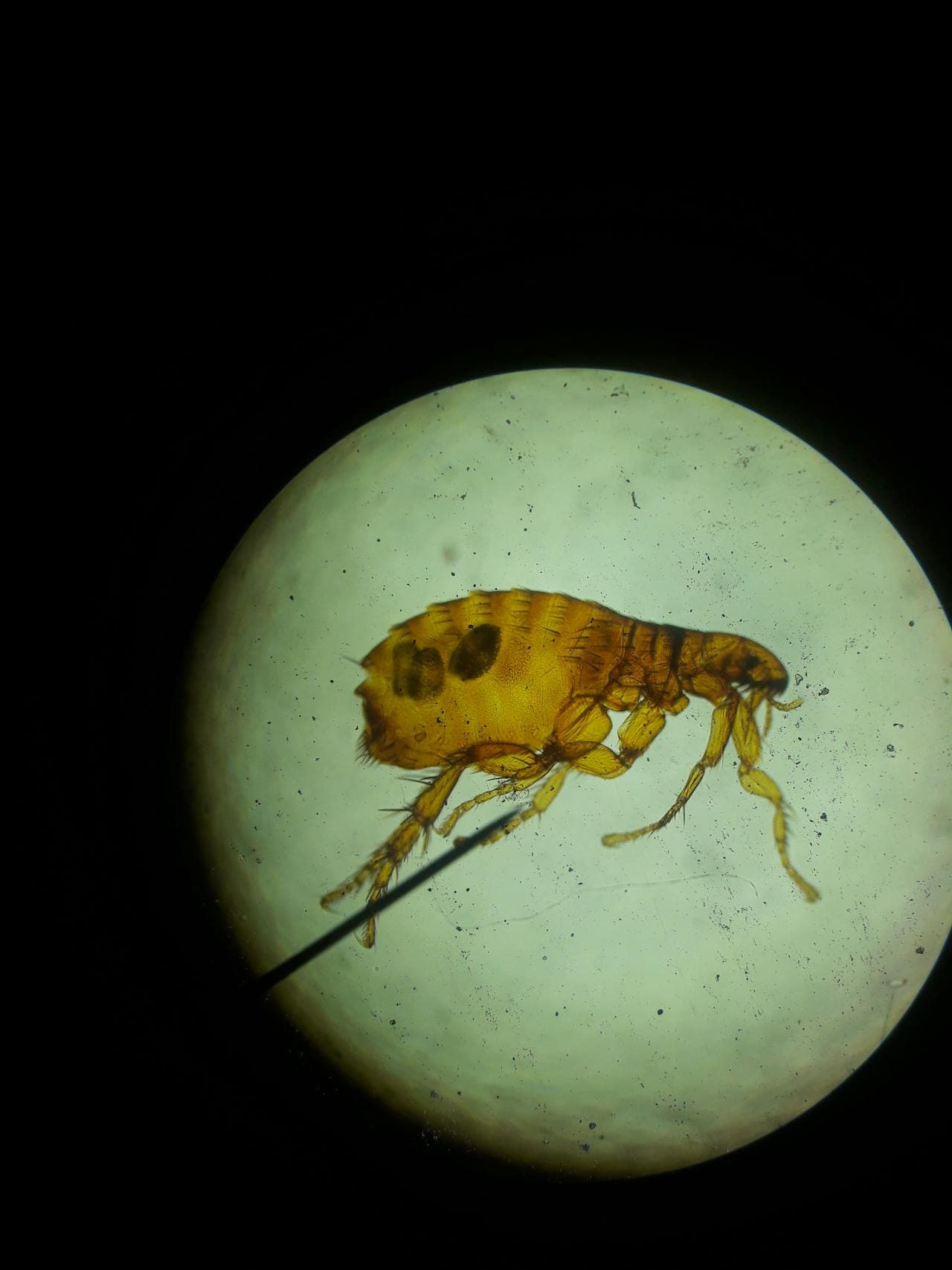
Flea Control in San Antonio
Flea infestations multiply fast and spread across the entire home — eggs and larvae embed in carpet fibers, upholstery, pet bedding, and yard soil long before adult fleas are visible on pets. Licensed local operators apply professional Insect Growth Regulators (IGRs) plus adulticides across all four life stages (eggs, larvae, pupae, adults) for elimination DIY treatments rarely achieve.
Common species treated
- Cat flea (Ctenocephalides felis) — dominant US species, ~95% of residential infestations
- Dog flea (Ctenocephalides canis) — less common in US than the name suggests
- Human flea (Pulex irritans) — rare in US, occasional in rural and wildlife-adjacent properties
- Sticktight flea (Echidnophaga gallinacea) — poultry, livestock, and wildlife exposure
Starting price
Starts as low as
$99
for initial flea treatment
Final cost depends on home size, infestation severity, and treatment method. Free inspection determines exact pricing — no obligation to book. See FAQ below for details.
Flea Control for San Antonio, TX homeowners
Whether you're in Alamo Heights, Downtown, or anywhere in San Antonio, you face real flea pressure. San Antonio's climate — long humid summers and mild winters extend the breeding season for most pests — combined with San Antonio's housing density and landscaping creates the kind of conditions fleas thrive in. Local technicians know which species are most active in Texas, where they harbor in homes built for this region, and what treatment approach delivers lasting results in San Antonio's specific environment.
What makes San Antonio different
San Antonio sits on the edge of the Texas Hill Country, where humid Gulf air meets drier western Texas conditions. Local pest pressure leans toward fire ants, scorpions, and termites — particularly in older neighborhoods near the San Antonio River where moisture creates favorable termite habitat. Rapid suburban expansion into former ranchland in places like Helotes and Stone Oak has increased calls for rattlesnake and rodent removal.
Fleas in San Antonio: what to know
Flea pressure runs nearly year-round here, with the May-September window producing peak outdoor activity but indoor populations sustaining through warm winters. In San Antonio, suburban greenways, dog parks, and the year-round shaded landscaping common across the metro maintain outdoor flea reservoirs — pets cycling through these zones pick up egg loads that seed home carpets within 24-48 hours. The cat flea (Ctenocephalides felis) accounts for roughly 95% of residential infestations in San Antonio regardless of which pet is in the home, and effective elimination requires coordinated home + yard + vet pet treatment using Insect Growth Regulators rather than DIY foggers — pupae stages survive most over-the-counter products.
Top pest pressures in the San Antonio area
- Termites (Eastern subterranean)
- Mosquitoes
- Cockroaches
- Fire ants
Licensing & regulation in Texas
In Texas, structural pest control is regulated by the Texas Department of Agriculture, Structural Pest Control Service (TDA-SPCS) under Texas Occupations Code Chapter 1951. Technicians complete 8 hours of classroom training and 40 hours of supervised on-the-job training as a licensed Apprentice in each pest category. Certified commercial applicators add 20 hours of classroom training in general pest control standards and a minimum 6 months of work experience. Texas requires separate certification for each pest category — termite/wood-destroying, general pest, and lawn — and continuing education must include at least one credit in laws, safety, environmental protection, or integrated pest management every cycle. Any technician treating your San Antonio home should be able to confirm their certification in writing — a licensed local pro will welcome the question.
Service areas around San Antonio
Alamo Heights • Stone Oak • Downtown • Southtown • Helotes
Flea species we treat in San Antonio, TX
San Antonio's hot humid subtropical climate produces some of the heaviest year-round flea pressure in Texas. The city's mild winters rarely drop low enough or long enough to halt outdoor flea reproduction, and indoor central heating sustains pupal development through January and February. Three flea species drive the volume of residential pest control calls across the metro.
Cat flea (Ctenocephalides felis)
Cat fleas dominate San Antonio flea pest control — over 95% of pet flea infestations across the metro are this single species, regardless of whether the host is a cat, dog, or feral animal moving through the yard. Adults are 1/16 inch, dark brown to mahogany, with a powerful jumping leg structure. In San Antonio, the life cycle completes in 14 to 18 days at peak summer humidity — among the fastest reproduction windows in Texas, which is why a missed prevention dose on a pet can trigger an explosive infestation within a single month. Effective San Antonio treatment combines indoor IGR application (carpets, pet bedding, baseboards), outdoor perimeter applications targeting shaded zones under porches and decks where larvae develop, and host-side treatment coordinated with the homeowner's veterinarian. Pyrethroid-only treatments without IGR routinely fail because the pupae are protected from contact insecticides for 5 to 14 days.
Dog flea (Ctenocephalides canis)
Dog fleas are uncommon in San Antonio residential pest control compared to cat fleas. When they do appear, the source is usually a rural property on the city's southern and western edges, an imported dog, or a kennel/breeder environment with high host density. Visual identification against cat fleas requires microscopy. Treatment protocol is identical to cat flea work.
Oriental rat flea (Xenopsylla cheopis)
Oriental rat fleas in San Antonio appear in homes only after rodent infestation — most commonly roof rats nesting in palm tree fronds, in attics, or in garage rafters across older inner-loop neighborhoods. The flea is the historical bubonic plague vector and remains a public health concern in any setting where rats and humans share enclosed space. Treatment requires resolving the rodent infestation first; pesticide application alone fails because new rats arrive within days and reseed the flea population. San Antonio operators inspect for rodent activity on every flea call that doesn't clearly tie to a pet.
Frequently asked questions about flea control in San Antonio
How do I know if I have fleas?
The most reliable signs are pets scratching constantly (especially around the tail base, belly, and inner thighs), small dark specks in pet bedding (flea dirt — actually digested-blood feces that turns reddish-brown when wet), and bite marks on humans typically clustered on ankles and lower legs. A simple check: comb the pet over a damp white towel and look for jumping insects or dark specks. If specks turn reddish when damp, those are fleas. The free inspection confirms species and severity and identifies harborage zones in the home and yard.
Why did my over-the-counter flea treatment fail?
Over-the-counter flea foggers and sprays typically only target adult fleas, which represent roughly 5% of the total infestation. The remaining 95% — eggs, larvae, and pupae — survive most OTC treatments. The pupae stage is particularly resistant because flea pupae are encased in a sticky cocoon that insecticides do not reliably penetrate. Pupae can remain dormant for weeks to months and emerge in waves triggered by warmth and vibration. Professional treatment uses Insect Growth Regulators (IGRs) like methoprene or pyriproxyfen that disrupt the egg and larval stages, plus adulticides with longer residual activity than OTC products. Most homeowners who try DIY first end up calling for professional service within 4-6 weeks.
Do I need to treat my pet at the vet at the same time?
Yes. Pest control operators do not apply products directly to animals — that is veterinary scope. Home treatment without coordinated pet treatment cycles the infestation back within weeks because the pet keeps re-seeding eggs into the carpet. The standard sequence is: vet treats the pet (typically a topical or oral product effective for 30+ days), home treatment happens within the same 24-48 hour window, and yard treatment follows. Coordinated treatment of all three breaks the cycle; treating any one alone does not.
How much does flea treatment cost?
Flea treatment starts as low as $99 for initial residential service. Final cost depends on home size, pet count, severity of the infestation, whether yard treatment is included alongside interior work, and whether a 10-14 day follow-up treatment is scheduled. Typical entry-tier jobs run $99-$135; larger homes and combined indoor-plus-yard programs run $200-$300; severe whole-home infestations can reach $400-plus. Recurring quarterly plans cost less per visit than one-time emergency treatment for ongoing pet households. Your free inspection determines exact pricing before any work is scheduled — no obligation to book.
How fast can someone come out for a flea infestation?
Most service areas offer same-day or next-day inspection and treatment for active flea situations. Because flea populations roughly double every 14-21 days under favorable conditions, delays of even one to two weeks meaningfully expand treatment scope and cost. If pets are scratching constantly, family members are getting bitten on ankles and legs, or visible flea activity is heavy, call now rather than waiting for a scheduled appointment.
Will the fleas come back after treatment?
Most operators schedule a follow-up treatment 10-14 days after the initial visit specifically to catch pupae that emerge after the first treatment. With coordinated pet treatment plus interior plus yard treatment plus follow-up, elimination is reliable. Without ongoing prevention — quarterly recurring service plus consistent vet flea treatment for pets — re-infestation is common in households with outdoor pets, dog-park use, or trail access where wildlife reservoirs cycle fleas back to the property. Recurring quarterly programs are significantly more reliable than reactive one-time treatments.
Other flea control service areas
Flea Control is available across our network in San Antonio and surrounding regional cities. Operators in each area treat the same flea pressures.
Other pest services in San Antonio
Dealing with more than one pest issue at the same address? Local operators in San Antonio treat the full range.
Pest Control in San Antonio
From termites and rodents to bed bugs and roaches — every pest has a different treatment, and getting it wrong wastes money. Local pros identify what you're dealing with and treat it right the first time.
See pest control →
Local termite inspectors in San Antonio
Termites cause more damage to U.S. homes every year than fires and storms combined. Most homeowners insurance does not cover the repairs.
See termite control →
San Antonio bed bug exterminators
Bed bugs spread fast and survive without feeding for over a year. DIY treatments almost always fail and let the infestation grow worse.
See bed bug exterminator →
Rodent Control services for San Antonio homeowners
Rats and mice carry over 35 diseases, chew through electrical wiring (a leading cause of house fires), and reproduce fast. One pair can produce 2,000 descendants in a year.
See rodent control →
Mosquito Control in San Antonio
Mosquitoes carry West Nile virus, Zika, EEE, and dengue. Beyond disease risk, an active mosquito population makes your yard unusable from dusk until dawn.
See mosquito control →
Local cockroach exterminators in San Antonio
Cockroaches trigger asthma attacks, contaminate food with salmonella and E. coli, and reproduce so fast that for every one you see, dozens more are hidden in walls and appliances.
See cockroach extermination →
San Antonio ant exterminators
Most ant species are nuisance pests, but carpenter ants damage wood like termites and fire ants deliver painful stings. Killing the trail you see does nothing to the colony of 50,000+ underground.
See ant control →
Bee & Wasp Removal services for San Antonio homeowners
Bees, wasps, hornets, and yellow jackets cause more emergency room visits than any other household pest — anaphylaxis risk, swarm response when nests are disturbed, and aggressive defense of nests near doorways and decks. Licensed local operators treat all stinging insects with safety and pollinator awareness, using professional-grade equipment for nest assessment, treatment, and removal.
See bee & wasp removal →
Spider Control in San Antonio
Most spiders are harmless and even helpful, but widow and recluse species pose a real medical risk to families — and which dangerous species are present depends heavily on where you live. A heavy spider problem also signals a larger insect population feeding them. Local pros identify what's actually in your home, clear webs and egg sacs, and treat the harborage and prey base that keep spiders coming back.
See spider control →
Ready to deal with your fleas in San Antonio?
Our network is answering calls right now. Free inspection, no obligation, available 24/7.
Free referral — calls connect to a licensed local provider.