Termite Control — Connect to a Licensed Local Termite exterminator
Termites cause more damage to U.S. homes every year than fires and storms combined. Most homeowners insurance does not cover the repairs.
If you've spotted mud tubes, hollow-sounding wood, or discarded wings, the colony is already established. Every week you wait costs more in structural damage.
Free referral — calls connect to a licensed local provider.
- Licensed local operators
- Free inspection
- Available 24/7
- No obligation
How it works
- 1
Call now
Talk to a local licensed technician — no menus, no hold music.
- 2
Free inspection
Honest assessment of what you're dealing with and what treatment fits.
- 3
Fast scheduling
Most appointments confirmed within 24 hours; same-day available when operators have capacity.
Why call us for termite control?
Local technicians
Licensed pros who know your area's homes and which termite species are most active locally.
Free inspection
No-cost, no-obligation home assessment. You see exactly what's going on before any treatment is scheduled.
Fast scheduling
Most appointments confirmed within 24 hours. Same-day often available depending on operator capacity in your area.
Treatment guarantees
If the problem returns inside the warranty period, your provider re-treats at no charge.
Why this matters
The cost of waiting on termites
Termites cause more damage to U.S. homes every year than fires and storms combined. Most homeowners insurance does not cover the repairs.
If you've spotted mud tubes, hollow-sounding wood, or discarded wings, the colony is already established. Every week you wait costs more in structural damage.
Free referral — calls connect to a licensed local provider.
- Structural damage to load-bearing wood
- Insurance rarely covers termite damage repair
- Colonies can exceed 1 million termites
- Damage often hidden until severe
Reference: EPA: Termites (U.S. Environmental Protection Agency).
Termite Control services
Licensed local operators handle every common termite situation, from quick spot treatments to full-home elimination programs.
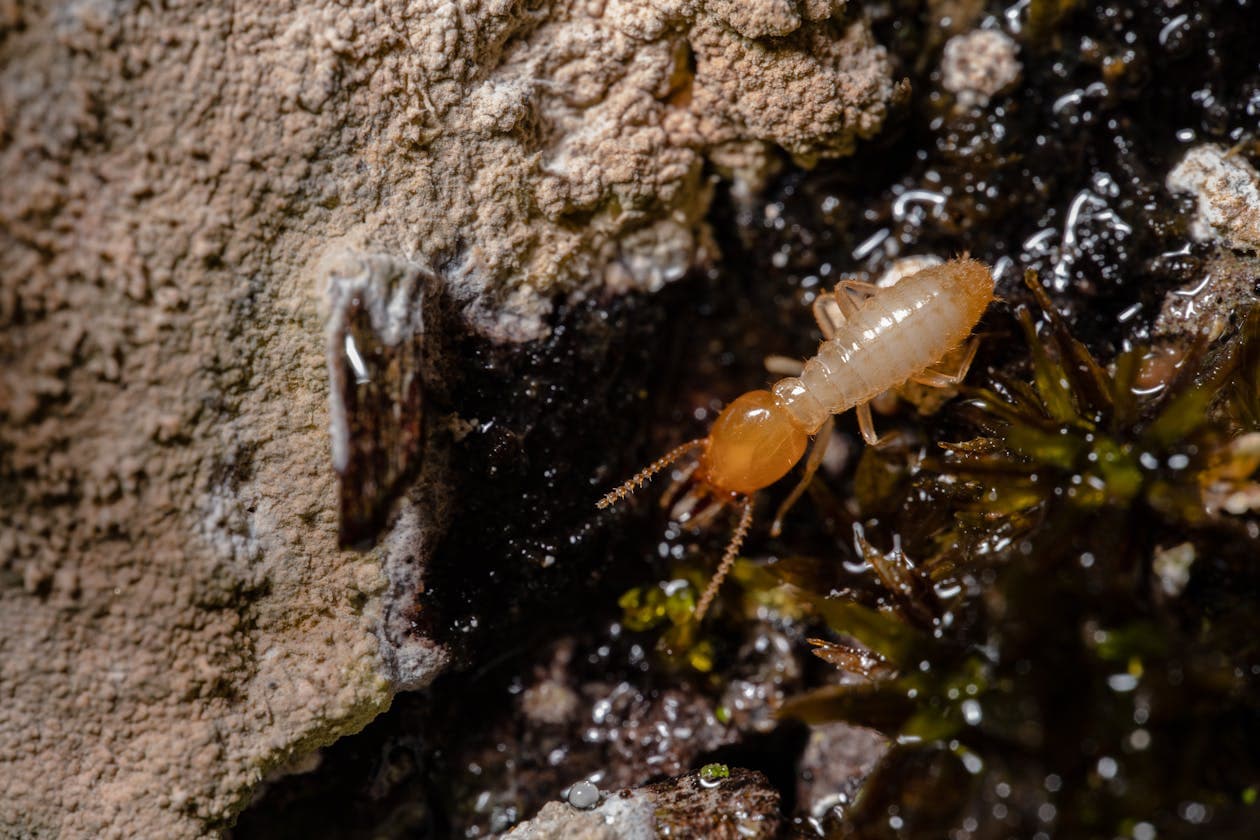
Termite Control
Termites cause more damage to U.S. homes every year than fires and storms combined. Most homeowners insurance does not cover the repairs.
Common species treated
- Subterranean termites
- Drywood termites
- Formosan termites
- Dampwood termites
Starting price
Starts as low as
$299
for spot treatment
Final cost depends on home size, infestation severity, and treatment method. Free inspection determines exact pricing — no obligation to book. See FAQ below for details.
Common termite species in the US
Termites are not interchangeable. Subterranean termites need soil contact and treat very differently from drywood termites that colonize wood without ever touching the ground. Formosan termites are aggressive Gulf Coast invaders that destroy homes faster than any other species. Dampwood termites only attack wood already saturated with moisture. Identifying the species correctly is the difference between a $300 spot treatment and a $3,000 whole-structure fumigation.
Eastern subterranean termite
Eastern subterranean termites (Reticulitermes flavipes) are the most common termite in residential pest control across the eastern, central, and southeastern US. Workers are creamy white to translucent and live in soil, building mud tubes up foundations, piers, and slab edges to reach wood. They eat cellulose 24/7, prefer softer woods, and a mature colony can contain 60,000+ workers. Spring swarms — winged reproductives flying from established colonies — are the most common detection event for homeowners and run March through May in most US regions. Effective treatment is either a liquid termiticide trench applied around the foundation or a baiting system installed at perimeter intervals. Spot treatment runs as little as $299 for visible-activity-only situations; whole-perimeter prevention runs $1,200-$2,500 for typical residential homes.
Drywood termite
Drywood termites (genus Incisitermes) live entirely inside the wood they consume — no soil contact, no mud tubes, no perimeter activity. They establish colonies in attic rafters, fascia, structural framing, hardwood floors, and antique furniture, and the only signs are tiny pinhole exit kickout holes producing piles of fecal pellets that look like coffee grounds. Drywood termites are most common in California (peak swarms August through October), Arizona, parts of the Gulf Coast, and Florida. Spot treatment of a localized infestation runs $300-$800 per area, but established whole-structure infestations require tent fumigation at $2,000-$5,000+. Heat treatment is an alternative for some structures. Regular inspections are the most effective protection in drywood-prone regions.
Formosan subterranean termite
Formosan termites (Coptotermes formosanus) are the most destructive termite species established in the US — workers are slightly larger than native subterranean termites and form colonies of 1-10 million workers that can consume a structural beam in months rather than years. Established across Hawaii, the Gulf Coast (Louisiana, Mississippi, Alabama, Texas, Florida), and pockets of South Carolina and Georgia, Formosan termites build aerial nests called cartons inside wall voids, attic spaces, and tree cavities — they do not always require soil contact like other subterranean species. Treatment requires more aggressive trenching, longer-residual termiticides, and often baiting to address aerial colonies. In active Formosan zones, recurring termite protection plans are significantly more reliable than reactive spot treatment.
Dampwood termite
Dampwood termites (genus Zootermopsis) are large (the largest termite caste in the US, with soldiers reaching 3/4 inch), and require wood that is already significantly moisture-damaged — they cannot infest sound dry framing. Common across the Pacific Northwest from Oregon through Washington and into northern California, dampwood termites colonize fallen logs, stumps, and structural wood with active leaks. Treatment is unusual among termites in that addressing the moisture source — fixing the leak, replacing rotted wood, improving drainage — often eliminates the conditions that allow dampwood activity. Direct termiticide treatment is reserved for established infestations in still-functional structural members.
Frequently asked questions about termite control in Your Area
How do I know if I have termites?
Common signs include mud tubes along foundations, hollow-sounding wood when tapped, discarded wings near windowsills, frass (termite droppings that look like sawdust), and bubbling or peeling paint. Many homeowners don't realize they have termites until significant damage has occurred.
How fast do termites cause damage?
A mature termite colony can consume up to 1 pound of wood per day. While individual termites work slowly, an established colony of 60,000+ workers can cause noticeable structural damage within 6 months and severe damage within 2 years if left untreated.
How much does termite treatment cost?
Termite treatment starts as low as $299 for spot treatment of a localized issue. Final cost depends on home square footage, infestation type (subterranean vs. drywood vs. Formosan), treatment method (liquid soil treatment, bait stations, or fumigation), and any structural damage discovered during inspection. Most jobs fall well below what homeowners expect. Full liquid treatments typically run $1,500-$3,000; tent fumigation for drywood termites can reach $4,000-$8,000+ depending on home size. Your free inspection determines exact pricing before any work is scheduled — no obligation to book.
Do I need to leave my home during treatment?
For most localized treatments, no. For tent fumigation (used for drywood termites), homeowners typically vacate for 2-3 days. Liquid soil treatments and bait stations don't require vacating.
How long do termite treatments last?
Most liquid soil treatments protect for 5-10 years. Bait station systems require ongoing monitoring but provide continuous protection. Annual inspections are recommended regardless of treatment type.
Featured service areas for termite control
These are the metros with the heaviest local pest pressure for termitesand the most active operator coverage. Your city doesn't need to be listed — operators answer nationwide.
Don't see your city?
Our operator network covers homeowners nationwide. Call any time — we route directly to a licensed local termite exterminator in your area.
Free referral — calls connect to a licensed local provider.
Ready to deal with your termites?
Our network is answering calls right now. Free inspection, no obligation, available 24/7.
Free referral — calls connect to a licensed local provider.