Ant Control — Connect to a Licensed Local Ant exterminator
Most ant species are nuisance pests, but carpenter ants damage wood like termites and fire ants deliver painful stings. Killing the trail you see does nothing to the colony of 50,000+ underground.
Spraying the trail kills 1% of the colony. The queen keeps laying eggs. Professional treatment uses bait the workers carry back, eliminating the entire colony — including the queen.
Free referral — calls connect to a licensed local provider.
- Licensed local operators
- Free inspection
- Available 24/7
- No obligation
How it works
- 1
Call now
Talk to a local licensed technician — no menus, no hold music.
- 2
Free inspection
Honest assessment of what you're dealing with and what treatment fits.
- 3
Fast scheduling
Most appointments confirmed within 24 hours; same-day available when operators have capacity.
Why call us for ant control?
Local technicians
Licensed pros who know your area's homes and which ant species are most active locally.
Free inspection
No-cost, no-obligation home assessment. You see exactly what's going on before any treatment is scheduled.
Fast scheduling
Most appointments confirmed within 24 hours. Same-day often available depending on operator capacity in your area.
Treatment guarantees
If the problem returns inside the warranty period, your provider re-treats at no charge.
Why this matters
The cost of waiting on ants
Most ant species are nuisance pests, but carpenter ants damage wood like termites and fire ants deliver painful stings. Killing the trail you see does nothing to the colony of 50,000+ underground.
Spraying the trail kills 1% of the colony. The queen keeps laying eggs. Professional treatment uses bait the workers carry back, eliminating the entire colony — including the queen.
Free referral — calls connect to a licensed local provider.
- Carpenter ants tunnel through structural wood
- Fire ants deliver painful stings; some people have severe allergic reactions
- Pharaoh ants spread bacteria in food and hospitals
- Trails contaminate kitchen surfaces and pantry items
Reference: EPA: General Ant Information (U.S. Environmental Protection Agency).
Ant Control services
Licensed local operators handle every common ant situation, from quick spot treatments to full-home elimination programs.
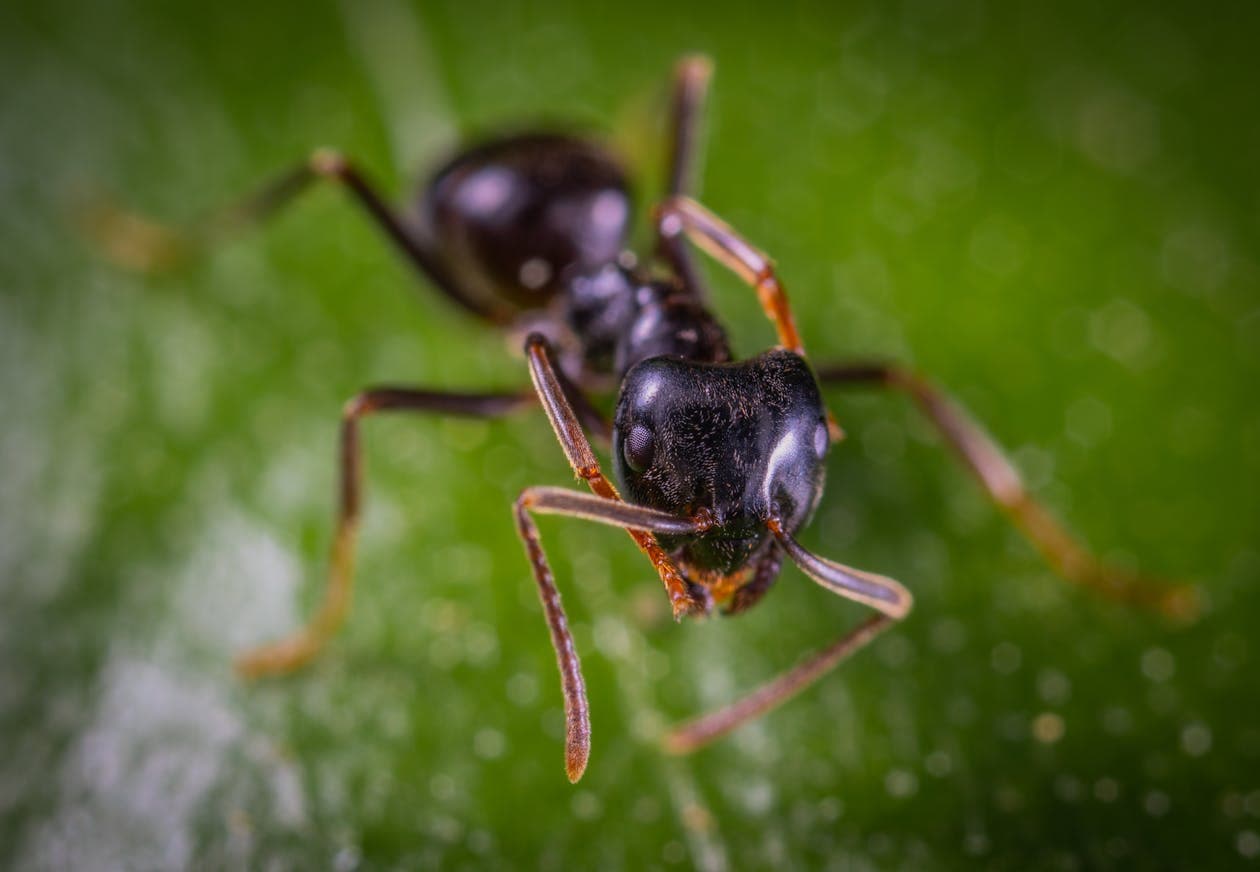
Ant Control
Most ant species are nuisance pests, but carpenter ants damage wood like termites and fire ants deliver painful stings. Killing the trail you see does nothing to the colony of 50,000+ underground.
Common species treated
- Odorous house ants
- Carpenter ants
- Fire ants
- Pavement ants
- Pharaoh ants
Starting price
Starts as low as
$69
for initial service
Final cost depends on home size, infestation severity, and treatment method. Free inspection determines exact pricing — no obligation to book. See FAQ below for details.
Ant infestations are the most common household pest issue in the United States, with over 700 species native to North America and at least 25 commonly found indoors. Most are nuisance pests, but a handful — carpenter ants, fire ants, pharaoh ants — cause real damage or pose health risks. The fundamental challenge with ant control is that the trail of ants you see is a tiny fraction of the colony. A typical mature colony has 50,000 to 500,000 workers underground, with a queen producing thousands of eggs per day. Spraying the visible trail kills 1-3% of the colony. The queen keeps laying. New foragers replace the dead within hours, and the cycle repeats indefinitely. Effective ant control means baiting the colony — getting workers to carry slow-acting bait back to the queen — not killing the trail.
How to identify common house ants
Ant identification matters because treatment varies by species. Odorous house ants are small (1/16 inch), dark brown to black, and emit a coconut-like smell when crushed — they're the most common nuisance ant in the US and form trails to sweet foods. Carpenter ants are large (1/4 to 5/8 inch), usually black, and tunnel through moisture-damaged wood (they don't eat wood like termites). Pavement ants are small, dark brown to black, and nest in driveway and sidewalk cracks. Pharaoh ants are tiny (1/16 inch), pale yellow to red, and infest hospitals, apartment buildings, and food processing facilities — they're aggressive movers and split colonies when threatened. Argentine ants are small, light brown, and dominant across California, the Gulf Coast, and the Southeast — they form supercolonies with multiple queens. Fire ants are reddish-brown, build large mounds, and deliver painful venomous stings.
Signs of an ant infestation
Visible ant trails are the most obvious sign — usually moving from a food source to an entry point along baseboards, countertop edges, or wall-floor junctions. Look for piles of fine dirt or sand near foundation cracks, sidewalks, or interior wall voids; many ant species deposit excavated soil at nest entrances. Wood frass (sawdust-like debris) at baseboards or wall voids indicates carpenter ant activity — they push out tunneled wood as they expand galleries. Mound formations in lawns or near foundations point to fire ants (Southeast, Texas) or pavement ants. Winged ants (alates) flying inside the home, especially in spring, mean an established colony is producing reproductives — mature colonies produce 1,000+ winged ants per emergence event.
Carpenter ants — a special threat to your home
Carpenter ants are the only ant species that causes structural damage. Unlike termites, they don't eat wood — they tunnel through it to create galleries for their colony. The damage looks like smooth-walled chambers carved into wood, often in moisture-damaged areas around windows, doors, roof penetrations, decks, and bathroom subfloors. Carpenter ants prefer wood that's already softened by moisture, so a carpenter ant infestation usually signals an underlying moisture problem (leaky roof, plumbing leak, deck-to-foundation water entry) that needs to be addressed alongside the ant treatment. Carpenter ant colonies often have a parent nest outside (in a tree stump, woodpile, or fence post) and satellite nests inside the home — eliminating only the visible indoor activity without finding and treating the parent nest leaves the infestation active.
Fire ants — health risks and treatment
Imported fire ants (Solenopsis invicta) are the most aggressive ant species in North America. They build large mounds in lawns and landscaping, and they swarm when disturbed — a single mound can deliver hundreds of stings to a person or pet who steps on it. Fire ant venom causes painful pustules and, in approximately 1% of stung individuals, severe allergic reactions including anaphylaxis. Fire ants are established across the entire Southeast (Florida, Georgia, the Carolinas), the Gulf Coast (Texas, Louisiana, Alabama, Mississippi), and increasingly California. Treatment usually combines targeted mound treatments (insecticide drenches or bait pellets applied directly to mounds) with broadcast bait for full yard coverage. Single-mound treatments are common after a homeowner finds an active mound near children's play areas, walkways, or pet zones.
Our ant control treatment process
Effective ant control follows a four-step process: inspection and identification, baiting, perimeter treatment, and follow-up. Inspection identifies the species, the food source attracting them, and the likely nest location — different species require different approaches. Baiting uses slow-acting bait formulations that workers carry back to the queen, eliminating the colony at the source over 1-3 weeks. Critically, no contact-kill spraying happens during baiting because it would interrupt the bait return. Perimeter treatment with non-repellent insecticides creates a barrier around the foundation that prevents new colonies from establishing. Follow-up visits 2-4 weeks later confirm elimination and re-treat any remaining activity. For severe carpenter ant infestations, treatment also includes locating and treating the parent nest outside the home — often in a tree, stump, or landscaping feature within 100 feet of the structure.
Talk to a ant exterminator now
Free inspection, no obligation. Operators answering 24/7.
Free referral — calls connect to a licensed local provider.
How much does ant control cost?
Standard ant control treatment for a typical single-family home runs $150-$400 for initial service. Severe infestations or multi-species treatments can run $400-$800. Carpenter ant treatment is more expensive — $400-$1,200 — because it usually requires both indoor baiting and outdoor parent-nest elimination, plus moisture remediation in many cases. Fire ant treatment runs $200-$500 for residential lawn coverage, with mound-by-mound treatment for ongoing prevention. Quarterly maintenance plans (recommended for homes in fire ant country and for repeat ant invaders) typically cost $40-$80 per visit. Most providers warranty initial treatment for 30-90 days; if activity returns within the warranty, they re-treat at no additional charge. The free inspection identifies the species, infestation severity, and the appropriate treatment scope before any pricing is finalized.
DIY ant treatments versus professional service
DIY ant treatments fail for predictable reasons. Hardware-store sprays use repellent insecticides that kill foragers on contact — but the colony perceives the dead workers and splits, sending out new foragers along different paths. The trail relocates; the infestation continues. Bait products sold in retail are slow-acting (which is correct), but homeowners often combine baits with sprays — the spray kills bait-laden workers before they return to the nest, defeating the bait's purpose. Boiling water on fire ant mounds kills 60-80% of workers but rarely reaches the queen 6+ inches deep, and the colony rebuilds within weeks. Professional ant control uses non-repellent insecticides that workers don't detect (so they continue to follow normal trails) plus targeted baiting. The result is colony elimination at the source rather than visible-trail suppression.
Long-term ant prevention
Preventing future ant infestations focuses on three things: food access, water access, and entry points. Food access prevention means storing sugary and protein foods in sealed containers, wiping kitchen counters daily, sealing trash bins, and not leaving pet food bowls out overnight. Water access prevention means fixing leaky faucets, clearing gutter overflows, eliminating standing water in plant trays, and sealing plumbing penetrations under sinks and dishwashers. Entry point sealing addresses gaps under exterior doors, around windows, where utility lines enter the home, and where landscaping or decking touches the foundation. Quarterly perimeter pest control treatments are the most reliable long-term prevention for homes that have had repeated ant problems — they prevent new colonies from establishing within striking range of the home.
Ant species we treat
Ant treatment fails most often because the wrong species was treated. Argentine ant trails respond to bait, fire ants do not. Carpenter ants need a structural inspection, pavement ants do not. Sugar ants chase sweet baits, grease ants ignore them. Here are the species licensed local operators most often identify on residential inspections.
Argentine ants
Argentine ants (Linepithema humile) are the dominant nuisance ant across most warm-climate US markets, particularly throughout California, the Gulf Coast, and the southeast. Workers are uniformly small (1/8 inch), light to medium brown, and form continuous trails along edges, baseboards, and counters. The species forms massive interconnected supercolonies — eliminating one nest does nothing because hundreds of nearby nests remain connected. Effective Argentine ant treatment uses non-repellent insecticide baits placed on active trails plus perimeter applications around the foundation; bait must be palatable and slow-acting so workers carry it back to the multiple nests before dying.
Carpenter ants
Carpenter ants (genus Camponotus) are the largest ants in residential pest control, 1/4 to 1/2 inch long, usually black or red-and-black. Unlike termites, they do not eat wood — they excavate galleries inside moisture-damaged wood for nesting, and the structural damage compounds slowly over years. Common entry points include roof leaks, plumbing leaks under sinks and tubs, and wood touching soil. Effective treatment requires locating and treating the parent colony plus any satellite colonies, then addressing the underlying moisture source. A surface insecticide spray alone reliably fails — carpenter ant treatment is one of the most underestimated jobs homeowners attempt and one of the most common reasons calls escalate to professional service.
Fire ants
Red imported fire ants (Solenopsis invicta) are aggressive mound-building ants across the Gulf Coast, southeast, and parts of the southwest. Workers are reddish-brown, 1/8 to 1/4 inch, and respond to mound disturbance by swarming and stinging — a single accidentally disturbed mound can produce dozens of stings within seconds. Fire ant venom causes characteristic small white pustules and triggers severe allergic reactions in roughly 1% of the population. Treatment requires bait products applied broadcast across the property, not direct mound treatment alone — fire ant queens are deep enough that surface treatments often fail. Recurring service is significantly more reliable than one-time treatments in active fire ant zones.
Pavement ants
Pavement ants (Tetramorium immigrans) are small (1/16 to 1/8 inch), dark brown to black ants that nest under sidewalks, driveways, foundation slabs, and patio stones. They produce visible mounds of fine soil between paver joints in spring. Pavement ants forage indoors for sugary and greasy foods and form trails along baseboards and across kitchen counters. Treatment combines bait stations along active trails with perimeter applications around foundation cracks where colonies enter.
Odorous house ants
Odorous house ants (Tapinoma sessile) are small (1/16 to 1/8 inch), brown to black, and produce a distinctive rotten-coconut smell when crushed — diagnostic of the species. They nest in wall voids, under flooring, and in mulch and forage indoors for sweets and proteins. Colonies are large and frequently relocate, which is why surface sprays alone reliably fail. Bait-based treatments using non-repellent products are the standard professional approach.
Pharaoh ants
Pharaoh ants (Monomorium pharaonis) are tiny (1/16 inch), light yellow to amber, and primarily an indoor pest in warm climates — apartment buildings, hospitals, and food service environments. Spraying pharaoh ants is actively counterproductive: surface insecticides cause colonies to bud, splitting into multiple smaller colonies that are harder to eliminate. Treatment is bait-only using slow-acting protein and sweet baits placed near trails.
Crazy ants
Crazy ants (genus Nylanderia) are small, dark brown to black, and named for their erratic movement. Tawny crazy ants (Nylanderia fulva) have established across the Gulf Coast and parts of Texas and Florida, producing massive populations that overwhelm electrical equipment, kill native ant species, and cause significant nuisance pressure. They do not respond well to standard ant baits — treatment requires specialized non-repellent products and is among the more difficult ant jobs operators encounter.
Acrobat ants
Acrobat ants (genus Crematogaster) are small (1/8 inch) with a distinctive heart-shaped abdomen they raise over the body when disturbed. They typically nest in moisture-damaged wood, abandoned termite or carpenter ant galleries, and tree cavities, and trail along utility lines into homes. Treatment includes locating the parent colony and addressing any moisture source allowing wood damage.
Frequently asked questions about ant control in Your Area
Why do ants keep coming back after I spray them?
The trail you see is a fraction of the colony — most ants stay underground tending eggs and the queen. Spraying kills only the visible foragers; the queen keeps laying 1,500+ eggs per day. Without baiting the colony, new foragers replace the dead within hours.
How do I know if I have carpenter ants vs. regular ants?
Carpenter ants are larger (1/4 to 5/8 inch) and usually black or dark brown. Look for sawdust-like debris (frass) below baseboards, wall voids, or wooden trim. Unlike termites, carpenter ants don't eat wood — they tunnel through it. Activity at night, especially in spring, is a red flag.
How long does ant treatment take to work?
Bait-based treatments show full results in 1-3 weeks because workers must carry the bait back to the queen. You'll often see increased activity for the first few days as ants take the bait, followed by sharp decline. Spray-and-pray gets visible results faster but doesn't solve the problem.
Are fire ants different from regular ants?
Yes — fire ants are aggressive, deliver painful stings, and build large mounds in lawns. They can swarm when their nest is disturbed. Treatment usually combines targeted mound treatments with broadcast bait for full yard coverage.
Will ants come back next season?
Without ongoing prevention, yes. Many homeowners opt for quarterly perimeter treatments to prevent new colonies from establishing. One-time treatments solve the current problem but don't prevent re-infestation.
How much does ant control cost?
Ant control starts as low as $69 for initial service. Final cost depends on ant species (carpenter ants vs. nuisance species like odorous house ants), infestation location, treatment method, and recurring perimeter prevention. Most jobs fall well below what homeowners expect. Carpenter ant treatment runs higher because it usually requires locating and accessing the nest, plus moisture remediation in many cases. Your free inspection determines exact pricing before any work is scheduled — no obligation to book.
Featured service areas for ant control
These are the metros with the heaviest local pest pressure for antsand the most active operator coverage. Your city doesn't need to be listed — operators answer nationwide.
Don't see your city?
Our operator network covers homeowners nationwide. Call any time — we route directly to a licensed local ant exterminator in your area.
Free referral — calls connect to a licensed local provider.
Ready to deal with your ants?
Our network is answering calls right now. Free inspection, no obligation, available 24/7.
Free referral — calls connect to a licensed local provider.