Bee & Wasp Removal — Connect to a Licensed Local Bee and wasp exterminator
Bees, wasps, hornets, and yellow jackets cause more emergency room visits than any other household pest — anaphylaxis risk, swarm response when nests are disturbed, and aggressive defense of nests near doorways and decks. Licensed local operators treat all stinging insects with safety and pollinator awareness, using professional-grade equipment for nest assessment, treatment, and removal.
If you've spotted a nest near a doorway, deck, attic, or play area — call now. Wasps complete structurally significant nests within 7-10 days, and removal cost climbs sharply once a nest is mature. Stings near children or anyone with allergies are a medical emergency, not a maintenance issue.
Free referral — calls connect to a licensed local provider.
- Licensed local operators
- Free inspection
- Available 24/7
- No obligation
How it works
- 1
Call now
Talk to a local licensed technician — no menus, no hold music.
- 2
Free inspection
Honest assessment of what you're dealing with and what treatment fits.
- 3
Fast scheduling
Most appointments confirmed within 24 hours; same-day available when operators have capacity.
Why call us for bee & wasp removal?
Local technicians
Licensed pros who know your area's homes and which stinging insect species are most active locally.
Free inspection
No-cost, no-obligation home assessment. You see exactly what's going on before any treatment is scheduled.
Fast scheduling
Most appointments confirmed within 24 hours. Same-day often available depending on operator capacity in your area.
Treatment guarantees
If the problem returns inside the warranty period, your provider re-treats at no charge.
Why this matters
The cost of waiting on stinging insects
Bees, wasps, hornets, and yellow jackets cause more emergency room visits than any other household pest — anaphylaxis risk, swarm response when nests are disturbed, and aggressive defense of nests near doorways and decks. Licensed local operators treat all stinging insects with safety and pollinator awareness, using professional-grade equipment for nest assessment, treatment, and removal.
If you've spotted a nest near a doorway, deck, attic, or play area — call now. Wasps complete structurally significant nests within 7-10 days, and removal cost climbs sharply once a nest is mature. Stings near children or anyone with allergies are a medical emergency, not a maintenance issue.
Free referral — calls connect to a licensed local provider.
- Stings can trigger anaphylaxis; severe reactions require emergency epinephrine and ER visits
- Disturbed nests produce swarm responses — single incidents of 50-100 stings are documented
- Carpenter bees damage wooden structures (deck rails, eaves, fascia) progressively over multiple seasons
- Yellow jacket nests in wall voids or ground holes are often missed until accidentally disturbed
Reference: EPA: Integrated Pest Management for Bees and Wasps (U.S. Environmental Protection Agency).
Bee & Wasp Removal services
Licensed local operators handle every common stinging insect situation, from quick spot treatments to full-home elimination programs.
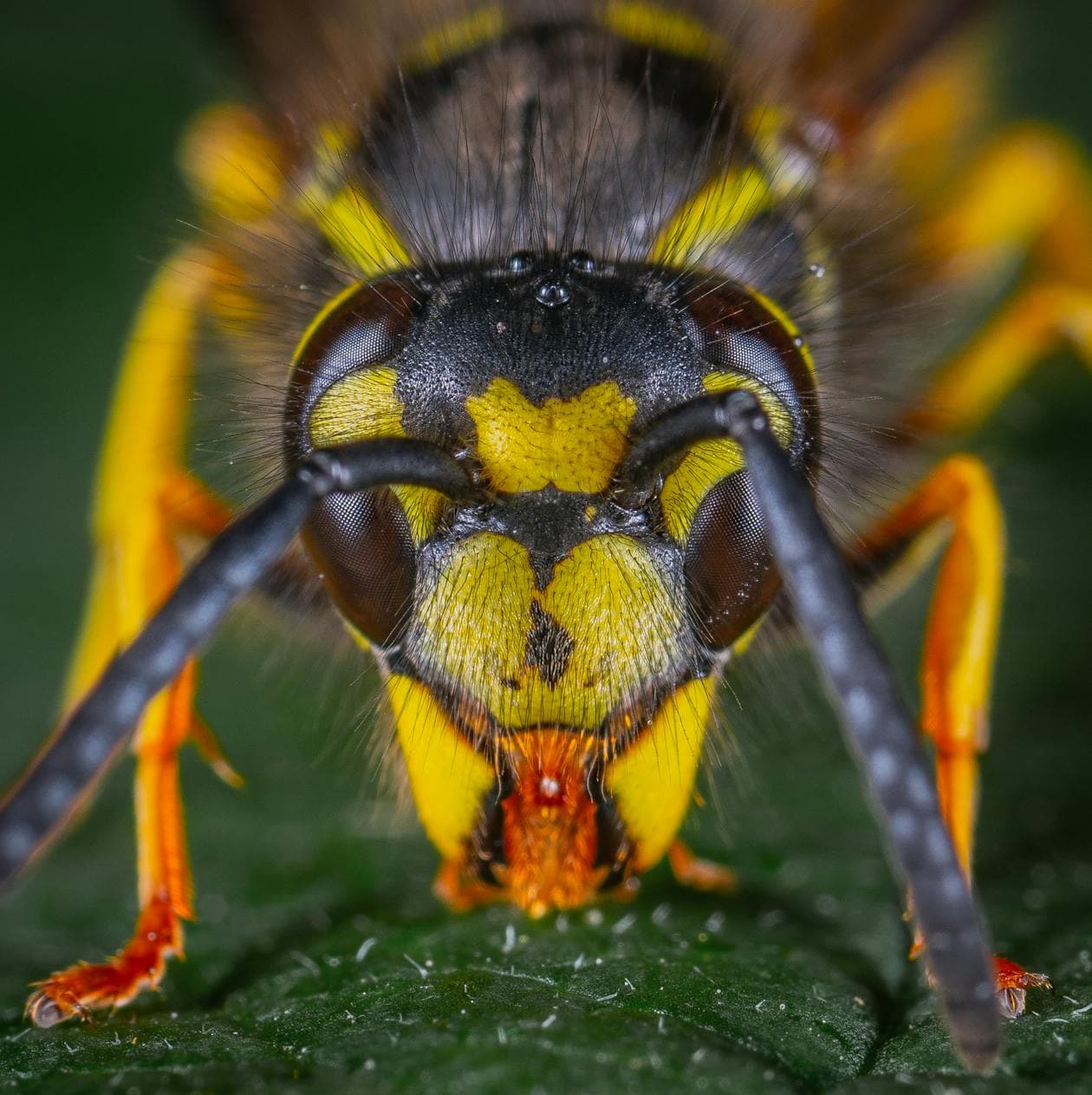
Bee & Wasp Removal
Bees, wasps, hornets, and yellow jackets cause more emergency room visits than any other household pest — anaphylaxis risk, swarm response when nests are disturbed, and aggressive defense of nests near doorways and decks. Licensed local operators treat all stinging insects with safety and pollinator awareness, using professional-grade equipment for nest assessment, treatment, and removal.
Common species treated
- Paper wasps (Polistes spp.)
- Yellow jackets (Vespula spp.)
- Bald-faced hornets (Dolichovespula maculata)
- European hornets (Vespa crabro)
- Carpenter bees (Xylocopa spp.)
- Honey bees (Apis mellifera)
Starting price
Starts as low as
$89
for single nest treatment
Final cost depends on home size, infestation severity, and treatment method. Free inspection determines exact pricing — no obligation to book. See FAQ below for details.
Stinging insects send more Americans to the emergency room each year than any other household pest. Bees, wasps, yellow jackets, and hornets are aggressive defenders of their nests — disturbing a nest can produce a swarm response of 50 or more stings, and roughly 1-2% of the US population has a severe allergic reaction to insect venom that can be fatal without emergency medical care. Time matters: wasps and yellow jackets build structurally significant nests within 7-10 days, and once a nest is mature, removal cost climbs three to five times what early-stage treatment would have cost. Licensed local operators treat all stinging insects through professional pest control — safe handling, accurate species identification, and pollinator awareness as standard practice across bees, wasps, hornets, and yellow jackets.
How to identify common stinging insects
Identification matters because treatment differs significantly. Paper wasps build umbrella-shaped open-cell nests under eaves, deck rails, and porch ceilings — they're slender with long legs, brown to reddish-brown, and 3/4 to 1 inch long. Yellow jackets are aggressive ground-nesters or wall-void nesters — black with bright yellow stripes, 1/2 inch long, and the most common cause of stinging emergencies in late summer when colonies peak at 4,000-5,000 workers. Bald-faced hornets build large football-shaped paper nests in trees and on building exteriors — black and white, 3/4 inch, and aggressive defenders within a 25-foot radius of the nest. European hornets are unusual in being active at night and can deliver multiple stings — yellow and brown, 1 to 1-1/2 inches. Honey bees are smaller and fuzzy with golden-brown bands — they swarm during reproductive periods (April-June in most US regions) but are not typically aggressive unless the hive is threatened. Carpenter bees are large, fuzzy, and bore round 1/2-inch holes into wood structures.
When stinging insects become an emergency
Several situations warrant same-day or next-day response rather than scheduling at convenience. Nests within 10 feet of a doorway, walkway, deck, or play area are immediate hazards — a single accidental disturbance can produce a swarm response. Anyone in the household with a known bee or wasp venom allergy is at medical risk for any nearby nest, even one not yet aggressive. Yellow jacket nests in wall voids that connect to interior living spaces can produce indoor swarms. Active aggression — wasps repeatedly buzzing or chasing people from a specific area — usually means a hidden nest is being approached. And in late summer (August-September), colony populations peak and aggression spikes, which is why most stinging insect emergencies cluster in those months. For these situations, our network operators offer same-day inspection and treatment in most service areas.
Why DIY wasp and hornet treatment is dangerous
Hardware-store wasp and hornet sprays advertise long-distance jets, and they do reach a nest from 15-20 feet — but they don't reliably eliminate the colony. Workers outside the nest at the time of treatment return, find their nest disturbed, and become aggressive. Inadequate spraying often kills 30-60% of workers but leaves the queen and brood, leading to a more aggressive rebuilt colony within days. Spraying nests at night (when most workers are inside) is safer for elimination but more dangerous for the homeowner — operating a flashlight and spray can on a ladder in the dark, near a nest containing thousands of stinging insects, is how serious incidents happen. Yellow jacket nests in wall voids cannot be effectively treated with surface spray; they require dust formulations injected into the void, which is professional equipment. The combined risk of incomplete elimination plus personal injury is why DIY wasp/hornet treatment is among the worst-outcome DIY pest control attempts homeowners make.
Our wasp, hornet, and yellow jacket extermination process
Effective stinging insect treatment is timing-driven. Inspection identifies the species, nest location, and access route. Treatment is typically scheduled for evening or early morning when most workers are inside the nest — colony populations are at their highest in the nest at those times, and elimination rates exceed 95%. For exposed nests (under eaves, on tree branches, on building exteriors), technicians apply a liquid or aerosol insecticide directly to the nest entrance and saturate the structure, then physically remove the nest after worker activity ceases (typically 24-48 hours later). For concealed nests (wall voids, ground holes, attic cavities), treatment uses dust formulations injected directly into the void using extension equipment — the dust persists and continues to kill workers as they move through it. Carpenter bee galleries are treated with dust applications into each bore hole, then sealed. Most exposed-nest treatments are complete in a single visit; concealed-nest treatments may require a follow-up.
How professional bee and wasp removal works
Professional stinging insect removal differs from DIY in three ways. First, identification: licensed operators distinguish between paper wasps, yellow jackets, hornets, honey bees, carpenter bees, and bumble bees on inspection — each species has different nesting habits, aggression levels, and treatment requirements. A homeowner who tries to spray a yellow jacket nest expecting paper wasp behavior often triggers a swarm response. Second, equipment: professional bee suits, respiratory protection, extension wands for high or buried nests, dust formulations for wall voids, and species-appropriate insecticide stocks. Hardware-store sprays don't reach concealed nests and don't penetrate to the colony's reproductive members. Third, timing and approach: experienced operators schedule treatments for early morning or evening when worker activity is lowest and elimination rates are highest, then sequence the treatment-then-removal pattern to prevent rebuilding. For honey bees and bumble bees, operators apply pollinator-aware safety protocols — these are protected and beneficial species, and a trained pro recognizes them on inspection and adapts the approach to the specific situation. Whether the situation is a paper wasp nest under an eave, yellow jackets in a wall void, hornets in a tall tree, or carpenter bees boring into deck rails, the professional process delivers safer, more reliable elimination than DIY at a price most homeowners find lower than expected — typically starting at $89 for accessible single-nest treatment.
Talk to a bee and wasp exterminator now
Free inspection, no obligation. Operators answering 24/7.
Free referral — calls connect to a licensed local provider.
How much does bee and wasp removal cost?
Stinging insect removal starts as low as $89 for single nest treatment of an accessible exposed nest (paper wasp under an eave, ground-nest yellow jackets in an open lawn). Final cost depends on nest accessibility, species, height, and whether multiple nests are present. Wall-void yellow jacket treatment runs $200-$400 because dust application requires specialized equipment and often follow-up visits. Bald-faced hornet nests in tall trees (20+ feet) cost more due to ladder or extension-pole equipment requirements. Carpenter bee treatment runs $150-$300 for typical residential bore-hole treatment plus structural sealing. Most jobs fall well below what homeowners expect for the visible relief — a treated paper wasp nest stops worker activity within 24 hours. Your free inspection determines exact pricing before any work is scheduled — no obligation to book.
How to prevent stinging insects from returning
Long-term prevention focuses on three categories: structural exclusion, food/water reduction, and habitat disruption. Structural exclusion means sealing gaps in eaves, fascia, soffit returns, and any wall penetrations where wasps could establish — most yellow jacket wall-void infestations begin with a half-inch gap. Food/water reduction means securing trash cans, cleaning up sweet spills, and not leaving pet food bowls outside (yellow jackets aggressively scavenge protein and sugar in late summer). Habitat disruption means removing old nests after treatment (returning queens often rebuild on the same site), filling in abandoned ground burrows that attracted yellow jackets, and treating wood structures preventatively for carpenter bees. Quarterly perimeter pest control plans typically include stinging insect prevention as part of broader coverage. For homes with previous yellow jacket or carpenter bee problems, recurring service is much more reliable than reactive one-time treatments.
24-hour and emergency stinging insect removal
Stinging insect emergencies are real and time-sensitive. Active stinging incidents in or near a home — children stung in a yard, dogs stung on a deck, repeated stings inside a wall-adjacent room — warrant same-day response. Anaphylaxis or any allergic reaction in the household requires medical attention first (call 911 or get to an ER), then pest control to eliminate the cause. Visible nests on home exteriors near foot traffic during peak season (July-September) are appropriate for next-day scheduling. Standard situations — a single paper wasp nest on a back fence, occasional foragers without an obvious nest — can wait for a regular appointment without the emergency premium. Network operators offer same-day inspection and treatment in most service areas during stinging insect season. Free inspection determines whether your situation warrants emergency response or whether a standard scheduled appointment is appropriate.
Common stinging insect species we treat
Stinging insects all sting, but they nest, behave, and respond to treatment differently. Misidentifying the species is the most common reason a DIY treatment fails — paper wasp aggression is moderate, yellow jacket aggression is extreme, and honey bees should rarely be treated as pests at all. Here is what licensed local operators encounter most often on residential calls.
Carpenter bees
Carpenter bees (genus Xylocopa) are large, fuzzy, and look almost identical to bumble bees, but the abdomen is shiny black rather than fuzzy. They bore round, perfectly symmetrical 1/2-inch holes into unpainted wood — fascia boards, deck rails, eaves, fence posts, and pergolas — and excavate galleries inside the wood for egg laying. A single carpenter bee gallery is mostly cosmetic; a colony established over multiple seasons compromises structural members. Males hover aggressively near the entrance hole and seem threatening but cannot sting; females sting only if directly handled. Treatment uses a dust formulation injected into each bore hole, then physical sealing of the entrance once activity ceases. Painted or stained wood is significantly more resistant; raw cedar, pine, and redwood are preferred targets. Carpenter bee damage is often the entry point that leads woodpeckers to enlarge holes hunting for larvae, multiplying the cosmetic damage. Most residential carpenter bee jobs run $150-$300 including bore-hole treatment plus structural sealing.
Yellow jackets
Yellow jackets (genus Vespula) are the most aggressive stinging insect in residential pest control and the leading cause of stinging emergencies in late summer. Workers are 1/2 inch long, black with bright yellow stripes, and unlike honey bees can sting repeatedly without dying. Colonies nest in ground holes, wall voids, attic cavities, and inside compost piles, and populations peak at 4,000-5,000 workers by August or September. Wall-void colonies are particularly dangerous — workers entering through a small exterior gap may also push through interior drywall when populations get crowded, producing indoor stinging incidents. Surface sprays do not work on concealed yellow jacket colonies; effective treatment requires injecting an insecticide dust formulation directly into the void using extension equipment. Aerial nests in eaves or shrubs respond to direct liquid or aerosol treatment, ideally applied at dawn or dusk when worker activity is lowest. Yellow jackets aggressively defend a 25-foot perimeter when disturbed and account for the majority of multi-sting incidents.
Hornets
Hornets are larger than typical wasps and build the most visually dramatic nests homeowners encounter. Bald-faced hornets (Dolichovespula maculata) are black and white, 3/4 inch long, and build large gray football-shaped paper nests in trees, shrubs, and on building exteriors — a mature nest reaches the size of a basketball and contains 400-700 workers. They aggressively defend a 25-foot radius and attack in coordinated swarms when threatened. European hornets (Vespa crabro) are larger still, yellow-and-brown, 1 to 1.5 inches long, and unusual in being active at night — porch lights and lit windows attract them. Both species require professional treatment; bald-faced hornet nests in tall trees often need extension-pole equipment or ladder work, raising treatment cost into the $200-$400 range. Asian giant hornets, despite media coverage, remain extremely rare in residential pest control. The much more common identification confusion is between bald-faced hornets and yellow jackets, both of which build paper nests but have very different aggression profiles and treatment requirements.
Paper wasps
Paper wasps (genus Polistes) are slender, long-legged, and 3/4 to 1 inch long — usually brown to reddish-brown — and build the open-cell umbrella-shaped nests most homeowners recognize hanging from eaves, deck rails, porch ceilings, and door frames. Colonies are small (20-200 workers), aggression is moderate, and they will only attack when the nest is directly threatened. Paper wasps are the most common stinging insect call and the easiest to treat: a single direct insecticide application to the nest, ideally at dawn or dusk, eliminates the colony in 24 hours. Single-nest paper wasp treatment of an accessible nest typically starts at $89 — the lowest price point in stinging insect work.
Honey bees
Honey bees (Apis mellifera) are smaller than carpenter bees, fuzzy, and golden-brown with darker bands. They build hexagonal wax combs inside hollow cavities — wall voids, attic spaces, hollow trees — and a mature colony can contain 20,000-60,000 workers plus 50-100 pounds of honeycomb. Honey bees are the least aggressive stinging insect on this list under most conditions, but a colony established inside a building structure is a serious situation: removing the bees alone leaves the wax comb behind, which melts in summer heat, leaks honey through ceilings, and attracts secondary pests including mice, ants, and roaches. Licensed operators will inspect, identify, and recommend the safest, most effective approach for honey bees on inspection — including the appropriate handling for any colony established inside a structure.
Bumble bees
Bumble bees (genus Bombus) are large, fuzzy, and look similar to carpenter bees, but the abdomen is fuzzy rather than shiny. They nest in ground cavities, abandoned rodent burrows, and occasionally in wall voids with exterior access. Colonies are small (50-400 workers), aggression is low, and bumble bees are important native pollinators. Operators typically recommend leaving accessible bumble bee nests alone if they are not in a high-traffic area; treatment is reserved for nests within 10 feet of doorways, decks, or play areas where contact risk is high.
Mud daubers
Mud daubers (family Sphecidae) are slender wasps with a long thread-like waist that build distinctive tube-shaped mud nests on walls, eaves, and inside garages and sheds. Despite the alarming appearance, mud daubers are solitary — there is no colony to defend — and rarely sting. Most pest control operators recommend simply removing the mud nests with a putty knife rather than treatment with insecticide, since the wasps prey on spiders and provide low-value pollination. Mud daubers are typically the easiest stinging insect call to resolve.
Frequently asked questions about bee & wasp removal in Your Area
How do I know if I have wasps, hornets, or honey bees?
Look at body shape, color, and nest. Wasps and hornets are slender with smooth narrow waists and long legs — typically yellow/black or black/white striped — and build paper nests with visible cells. Yellow jackets nest in ground holes or wall voids and are aggressive scavengers. Honey bees are fuzzy and golden-brown, smaller, and build hexagonal wax combs. Carpenter bees are large, fuzzy, and look almost identical to bumble bees but bore round 1/2-inch holes into wooden structures. The free inspection identifies the species and determines the safest treatment approach for your situation.
Why is DIY wasp treatment dangerous?
Hardware-store sprays often kill some workers but leave the queen and brood, which produces a more aggressive rebuilt colony within days. Treating nests at night reduces immediate sting risk but creates ladder-and-spray-can-in-the-dark scenarios that produce serious injuries every year. Yellow jacket wall-void nests can't be effectively treated with surface spray — they require dust formulations injected into the void using professional equipment. The combined risk of incomplete elimination plus personal injury makes DIY wasp/hornet treatment one of the worst-outcome DIY pest control attempts homeowners make.
What if it's actually honey bees and not wasps?
Licensed pest control operators handle bees, wasps, hornets, and yellow jackets. The operator will inspect, identify the species, and recommend the safest, most effective approach — which may include relocation when appropriate, especially for honey bees. Don't try to identify the species yourself before calling. Just call and let the operator inspect.
How much does bee and wasp removal cost?
Stinging insect removal starts as low as $89 for single nest treatment of an accessible exposed nest. Final cost depends on nest accessibility (eave vs. wall void vs. ground), species (yellow jackets in walls require more involved treatment than paper wasps on a porch), height of nest, and whether multiple nests are present. Most jobs fall well below what homeowners expect. Wall-void yellow jacket treatment typically runs $200-$400; bald-faced hornet nests in tall trees run higher; carpenter bee treatment runs $150-$300 plus structural sealing. Your free inspection determines exact pricing before any work is scheduled — no obligation to book.
How fast can someone come out for a stinging insect emergency?
For active stinging emergencies — visible nest near a doorway during peak season, repeated stings happening in or near the home, or any household member with a known venom allergy — most service areas offer same-day or next-morning inspection and treatment. For standard situations like a single paper wasp nest on a back fence, a regular scheduled appointment without emergency premium is appropriate. Call to confirm response time for your specific situation.
Will the nest come back next season?
Returning queens often rebuild on the same site, so removing the old nest after treatment is part of long-term prevention. Without ongoing prevention, yellow jacket and paper wasp activity tends to return year after year in homes with favorable nesting conditions (sheltered eaves, ground burrows, wall void access points). Sealing entry points to wall voids, removing old nests, and quarterly perimeter pest control treatments materially reduce repeat infestations. Homes with previous severe stinging insect problems often opt for recurring service.
Featured service areas for bee & wasp removal
These are the metros with the heaviest local pest pressure for stinging insectsand the most active operator coverage. Your city doesn't need to be listed — operators answer nationwide.
Don't see your city?
Our operator network covers homeowners nationwide. Call any time — we route directly to a licensed local bee and wasp exterminator in your area.
Free referral — calls connect to a licensed local provider.
Ready to deal with your stinging insects?
Our network is answering calls right now. Free inspection, no obligation, available 24/7.
Free referral — calls connect to a licensed local provider.