Ant Control
12 Common House Ants: How to Identify What's in Your Kitchen (And Which Ones Need a Pro)
By Eli Hartman··11 min read
You found a line of ants marching across your kitchen counter, and your first instinct was probably to wipe them out and move on. That's reasonable. But before you reach for the spray, it's worth knowing what you're actually looking at — because with ants, the species determines everything: where they're nesting, what's drawing them in, whether they're a nuisance or a structural problem, and whether the can of spray under your sink will fix it or make it dramatically worse.
There are roughly 700 ant species in the United States, but only about 25 routinely come indoors. This guide covers the 12 you're most likely to find in an American home, how to tell them apart, and — the part most ant guides skip — which ones you can reasonably handle yourself and which ones are a phone call, not a project.
The two things that tell most ants apart
Before the species list, two quick identification tools that will get you most of the way there:
Count the nodes. Look at the narrow "waist" connecting an ant's midsection to its rear segment. Some species have one bump (node) there; others have two. You'll likely need a magnifying glass or a smartphone macro lens, but it's the single most useful field marker. Apps like iNaturalist, Seek, and Picture Insect can also give you a fast first guess from a photo.
Watch the behavior. Where are they trailing? What are they eating? A few hundred ants on your counter at night behave very differently from carpenter ants pushing sawdust out of a baseboard. Behavior often identifies an ant faster than anatomy.
Now the species.
Tier 1: The ones that actually need a professional
1. Carpenter ants
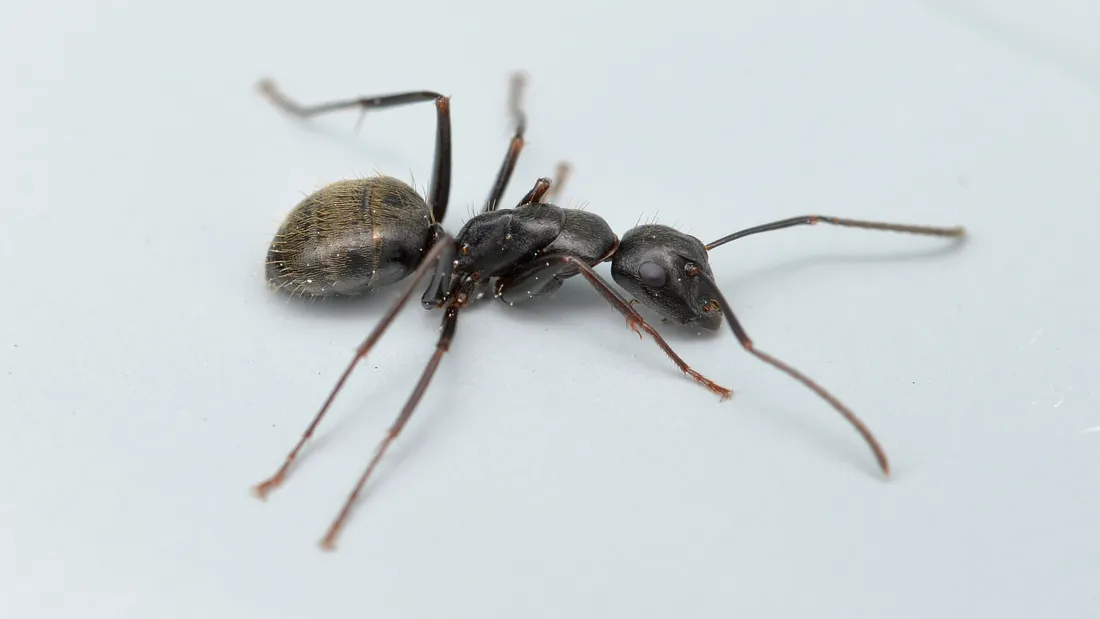
ID: Large — 1/4 to 1/2 inch, among the biggest ants you'll see indoors. Black or black-and-red. Single node, and an evenly rounded (convex) upper thorax when viewed from the side.
Where they nest: Moist or decaying wood — and this is the problem. Carpenter ants don't eat wood the way termites do; they chew through it to excavate galleries for their nests, leaving behind sawdust-like shavings called frass. Indoors, they favor wall voids, attic beams, areas around tubs and dishwashers, and foam insulation. They prefer wood that's already moist, which is why a carpenter ant infestation is often a sign of a hidden moisture problem too.
Threat level: HIGH. This is the one ant on the list that can cost you a structural repair. Colonies build slowly — 300 to 2,000 workers over two or more years — which means by the time you're seeing steady indoor activity, the nest may be well established inside your home's wood.
DIY or pro: Pro. Surface spray kills the foragers you see and does nothing to the nest inside your wall. Worse, you may not even have the main nest in your house — carpenter ants frequently maintain satellite nests indoors connected to a parent colony outside. Finding and treating the actual nest is the entire job, and it usually requires inspection.
2. Pharaoh ants
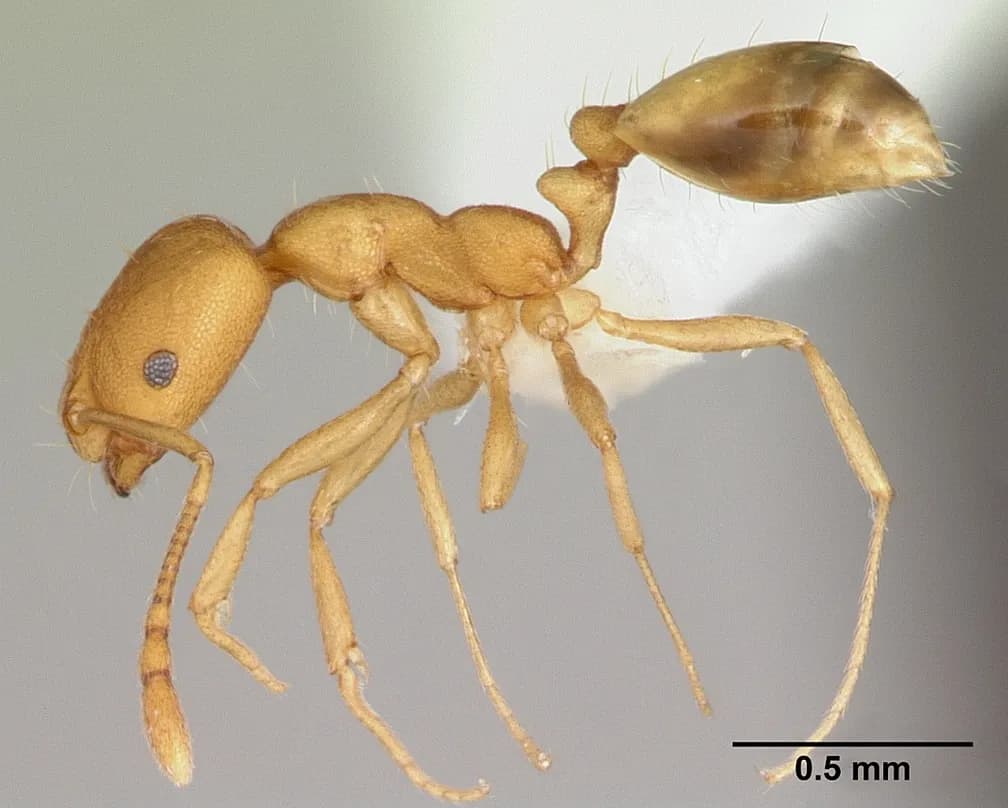
ID: Tiny — 1.5 to 2 mm, smaller than most ants people notice. Yellow to light red, with a two-node waist and no spines on the thorax.
Where they nest: Almost anywhere warm and hidden — wall voids, behind outlets, under appliances, beneath carpet edges. The University of Florida notes a single building can host hundreds of pharaoh ant nests at once.
Threat level: MODERATE to HIGH — and uniquely difficult. Pharaoh ants are a documented carrier of pathogens including Salmonella, which matters if they're trailing across food surfaces or, in worse cases, through medical settings.
DIY or pro: Pro, emphatically — and here's the critical part: do not spray them. When pharaoh ant colonies are stressed by repellent sprays, they do something called "budding": the colony splits, and satellite colonies scatter to establish new nests elsewhere in the building. Spraying a pharaoh ant problem is the single most reliable way to turn one nest into five. They require specific bait protocols, not chemicals off a shelf.
3. Fire ants
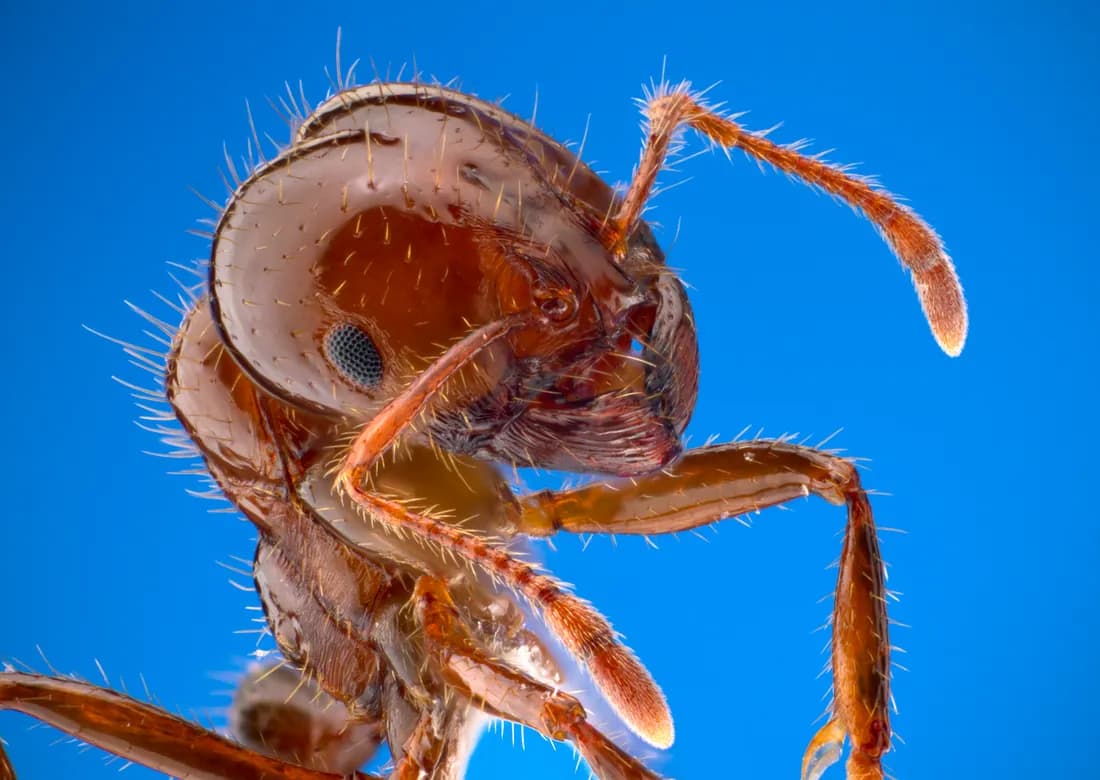
ID: Reddish to reddish-brown, 1/8 to 1/4 inch, with workers of varying sizes in the same colony. The clearest identifier is usually the nest: loose, dome-shaped mounds of soil in sunny areas of your yard, with no obvious central opening.
Where they nest: Outdoors, in sunny open soil — lawns, along sidewalks and foundations, near landscaping. They come indoors to forage, especially in hot, dry stretches.
Threat level: HIGH (medical). Fire ants are aggressive when disturbed and deliver a burning, painful sting that can produce welts and, in people with allergies, serious reactions. A disturbed mound can produce a swarm of stinging ants very quickly. For households with kids, pets, or anyone with a sting allergy, this is a safety issue, not just a nuisance.
DIY or pro: Pro for anything beyond a single small mound — especially in yards used by children or pets. Mound treatments exist for homeowners, but multiple-queen colonies can mean 200+ mounds per acre, and incomplete treatment simply relocates the problem.
Tier 2: The kitchen nuisances you can often manage
These are the ants most people actually meet — the ones trailing across a counter looking for crumbs. They're rarely dangerous, but a few have quirks worth knowing.
4. Odorous house ants
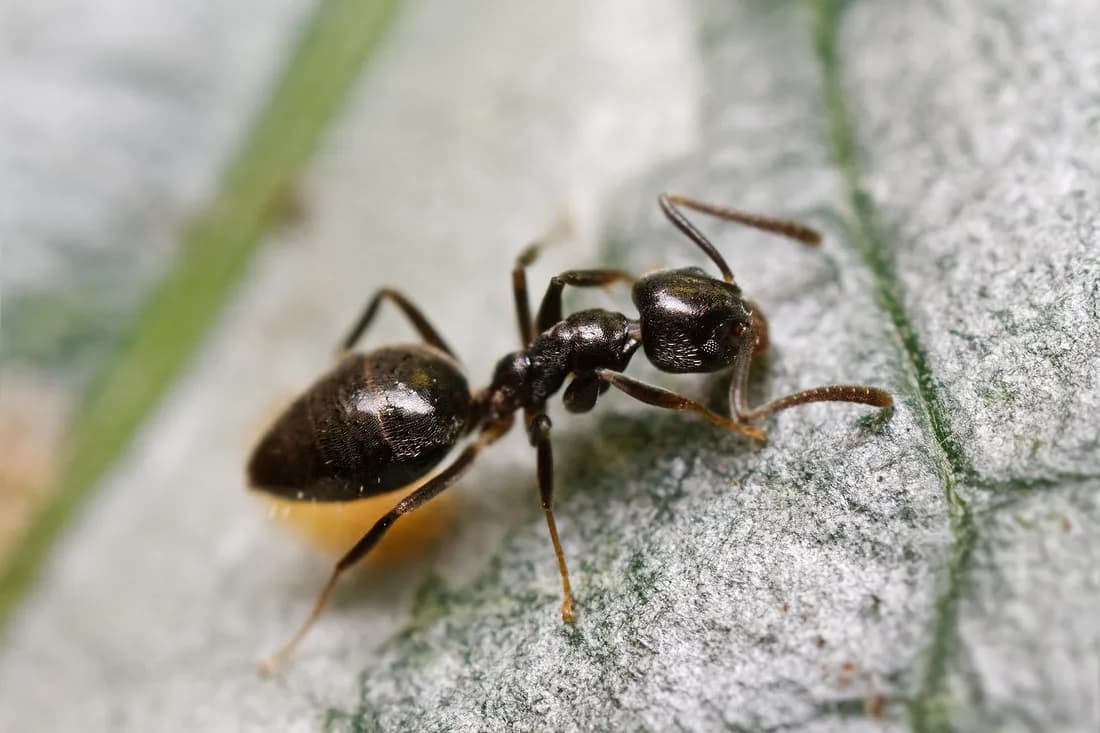
ID: Small, 2.4 to 3.3 mm, dark brown to black, uniform in size. The giveaway: crush one and it smells like rotten coconut. The single waist node is hidden from above by the abdomen.
Where they nest: Wall voids near hot water pipes and heaters, crevices around sinks. Colonies can reach 100,000 ants with many queens, and they form supercolonies.
Threat level: LOW. A contamination nuisance, not a danger.
DIY or pro: DIY-friendly to start — sweet baits placed along trails work well. But like several "tramp" ants, disturbing them with sprays can trigger satellite colonies to split off and relocate. If baiting doesn't resolve it in a couple of weeks, the colony structure is likely too large for a retail approach.
5. Argentine ants
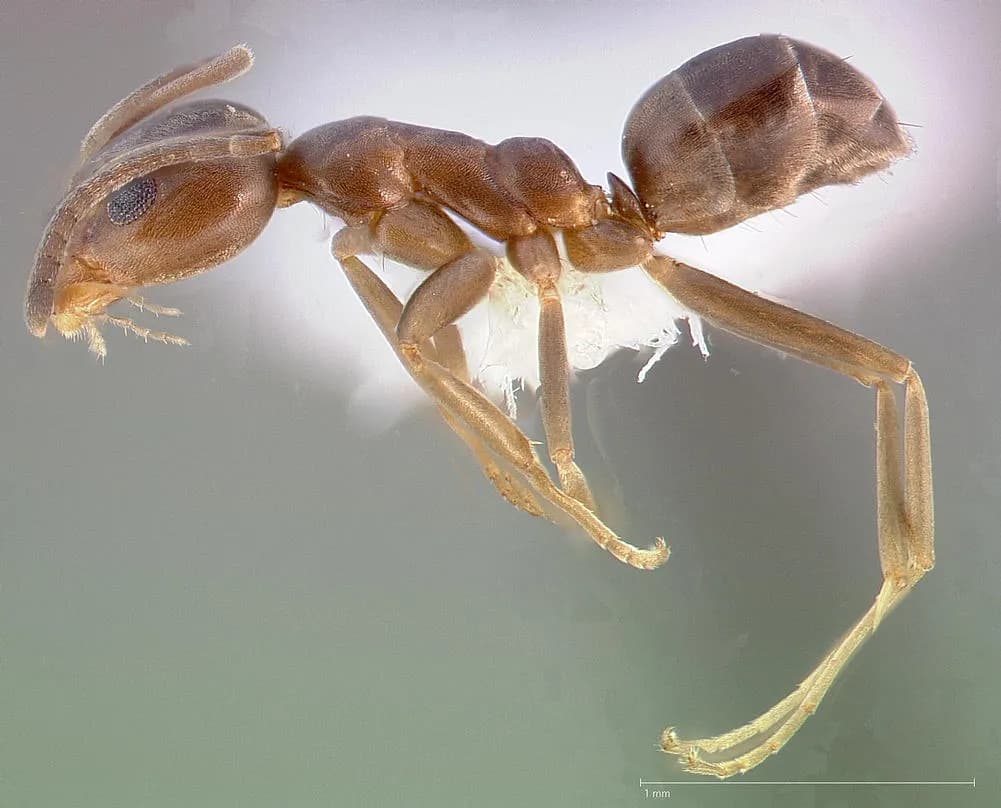
ID: 2.2 to 4 mm, light to dark brown, single pointed node, no thorax spines. Often confused with odorous house ants — but Argentine ants don't smell when crushed. Honestly, a definitive ID frequently requires magnification.
Where they nest: Moist soil near foundations, under boards and stones, in potted plants. An invasive species that forms enormous, cooperating supercolonies.
Threat level: LOW. Not venomous and not a structural threat, but their sheer numbers make them one of the most stubborn home invaders.
DIY or pro: DIY-friendly to attempt; pro if the supercolony is large. Their long foraging distances mean the nest you need to treat may be nowhere near where you're seeing them.
6. Acrobat ants
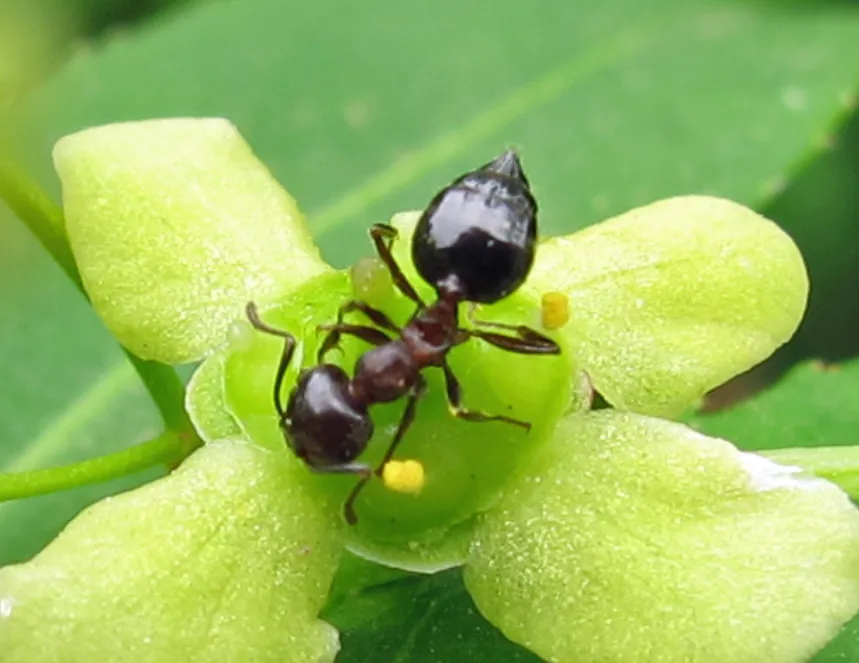
ID: Small, with a distinctive heart-shaped abdomen they often raise over their body when disturbed (hence the name). Two nodes. Emit an odor when threatened.
Where they nest: Dead or rotting wood, under bark, in logs and firewood — and sometimes in wall voids and foam insulation indoors.
Threat level: LOW to MODERATE. They don't cause structural damage, but they have a notable habit of stripping insulation from electrical and telephone wiring, which can cause shorts. Because they nest in moist wood, their presence — like carpenter ants — can flag an underlying moisture issue.
DIY or pro: DIY-friendly for foragers, but persistent indoor activity warrants inspection to find the moisture source drawing them in.
7. Pavement ants
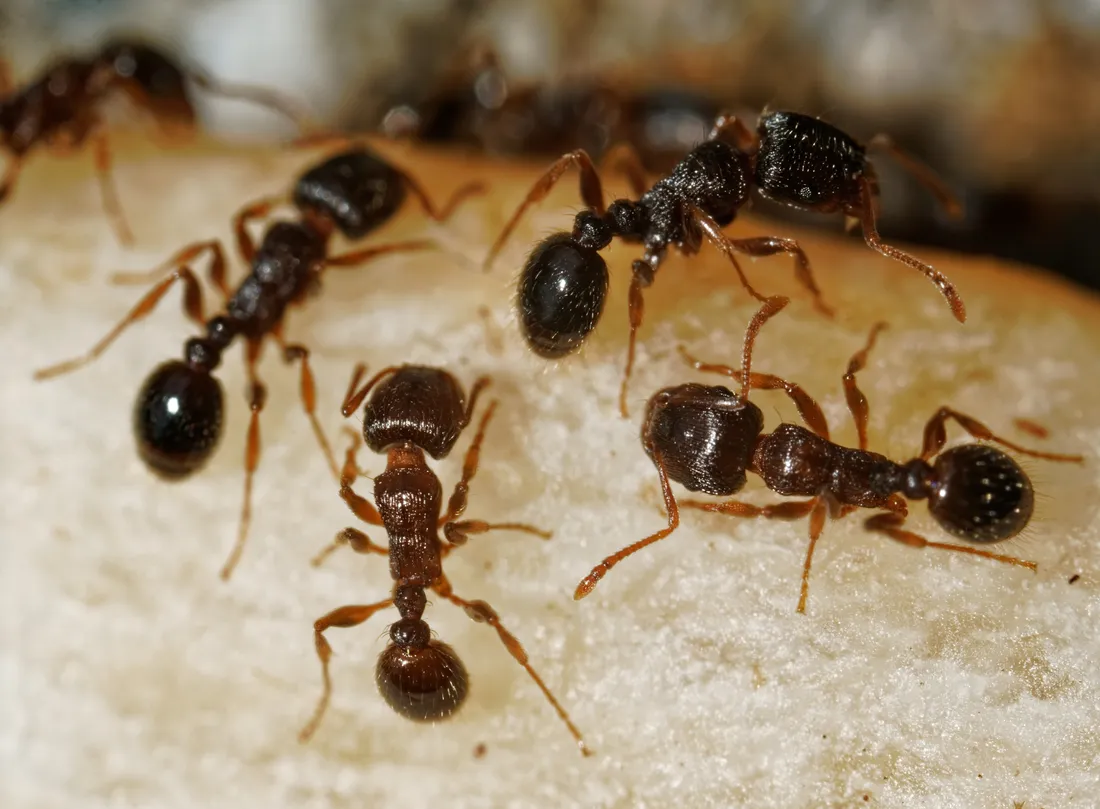
ID: 1/8 inch, reddish-brown to black, two nodes, one pair of small spines on the thorax, and fine grooved lines on the head and thorax.
Where they nest: Under sidewalks, driveways, slabs, and foundation edges — you'll often see them pushing up little piles of displaced soil between pavement cracks.
Threat level: LOW. They can sting but rarely do. Over long periods their excavations under hardscapes can undermine them slightly, but they're not a home-structure threat.
DIY or pro: DIY-friendly. Baits work, and accessible outdoor nests can be treated directly.
8. Little black ants
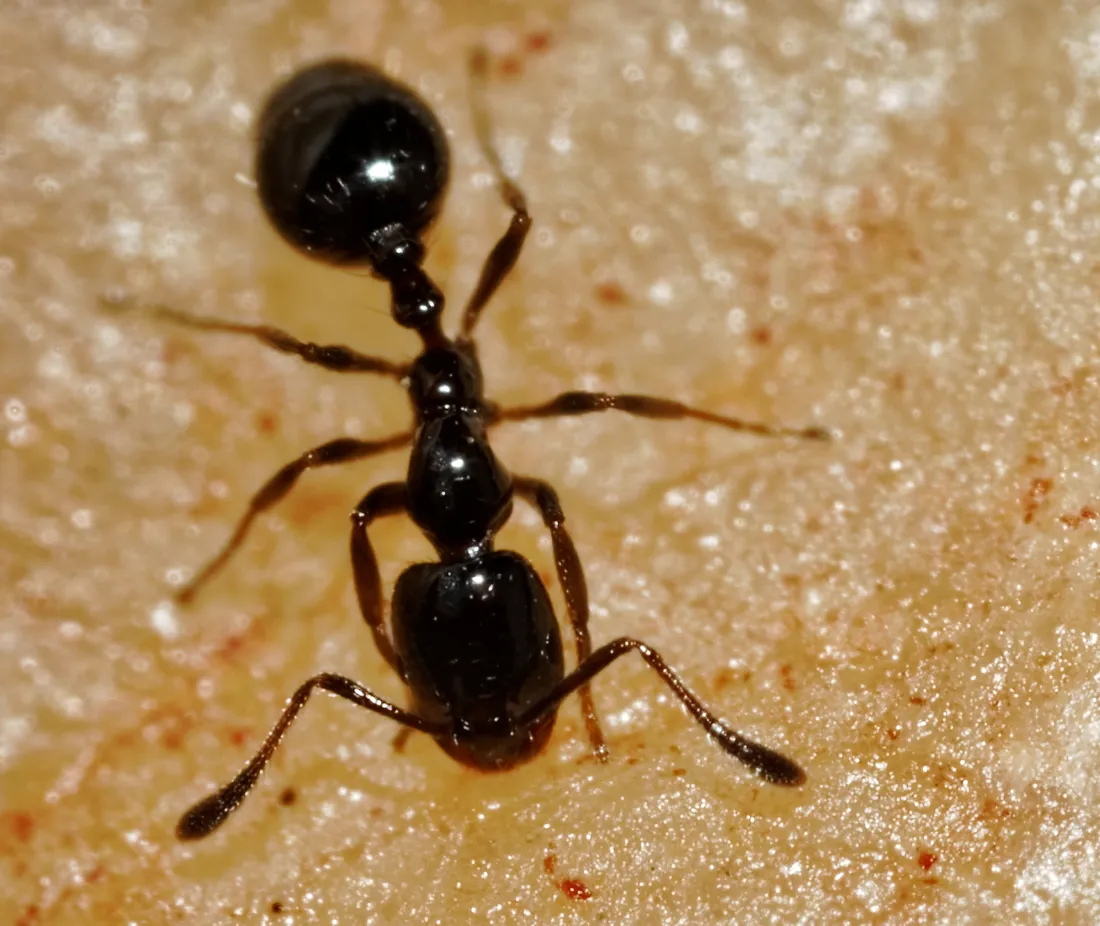
ID: Very small (about 1/16 inch) and uniformly dark brown to black. Two nodes.
Where they nest: Woodwork, wall voids, masonry, and outdoors under rocks and in rotting wood.
Threat level: LOW. A pure nuisance forager.
DIY or pro: DIY-friendly. Their long foraging trails can make the nest hard to locate, so baits are usually more practical than trying to find and treat the colony directly.
Tier 3: Less common, still worth knowing
9. Crazy ants
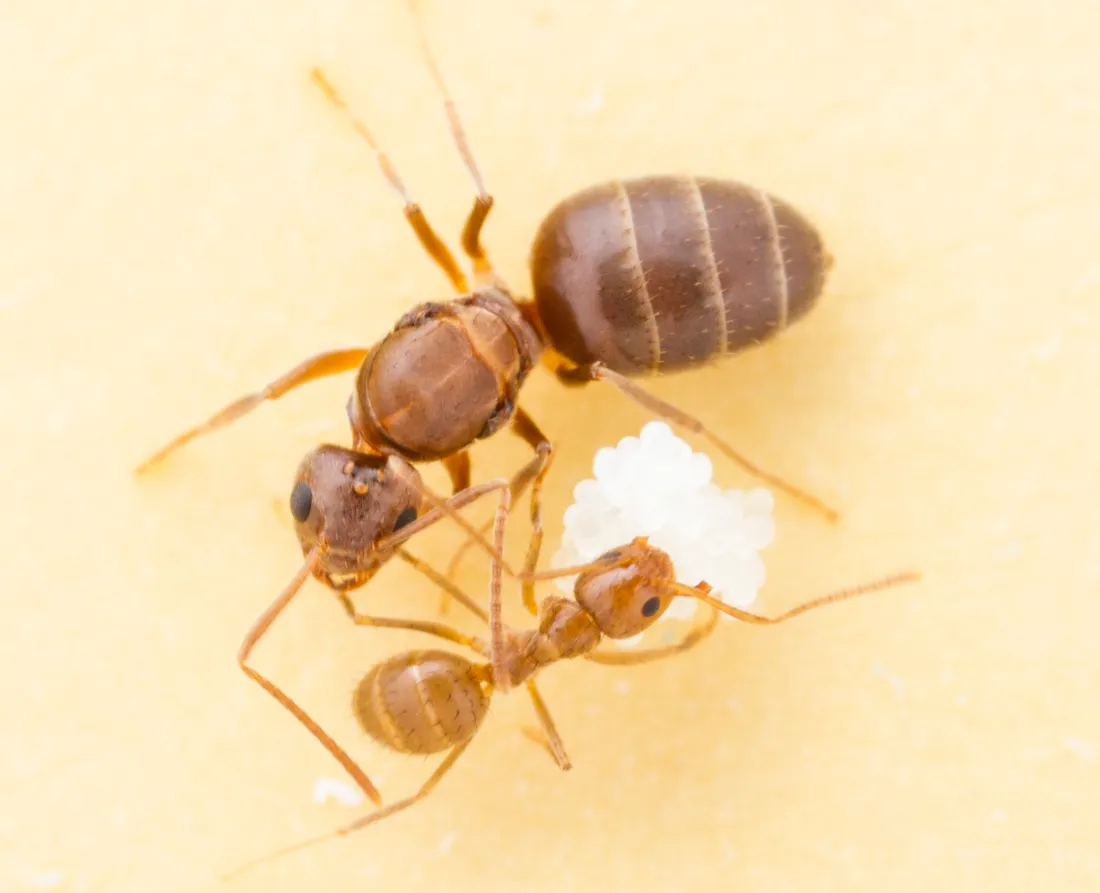
ID: Dark, with unusually long legs and antennae and a fast, erratic, zigzagging walk that looks "crazy" — the easiest behavioral ID on this list. One node.
Threat level: LOW, but notorious for sheer numbers and for being attracted to electrical equipment.
DIY or pro: DIY to attempt; pro if numbers are overwhelming, which with crazy ants they often become.
10. Ghost ants
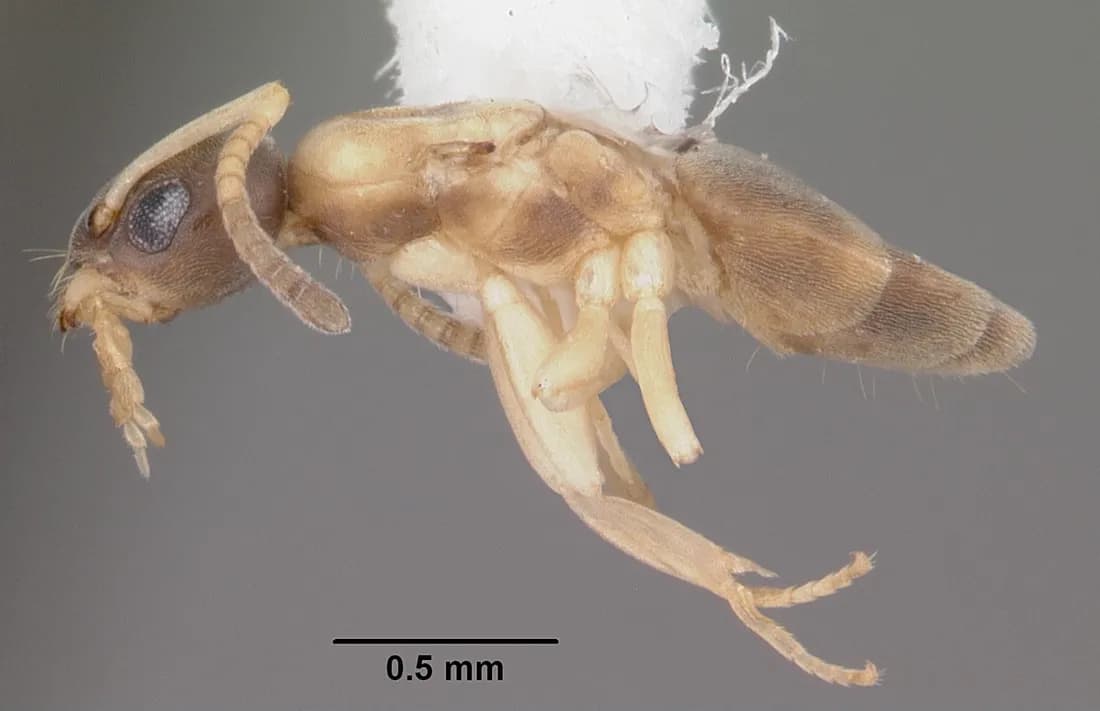
ID: Tiny (about 1.5 mm) with a dark head and thorax but a pale, almost translucent abdomen and legs — they seem to "appear from nowhere," which is where the name comes from.
Threat level: LOW. A warm-climate nuisance ant, common in the South.
DIY or pro: DIY-friendly with sweet baits; persistent multi-nest activity may need a pro.
11. Thief ants
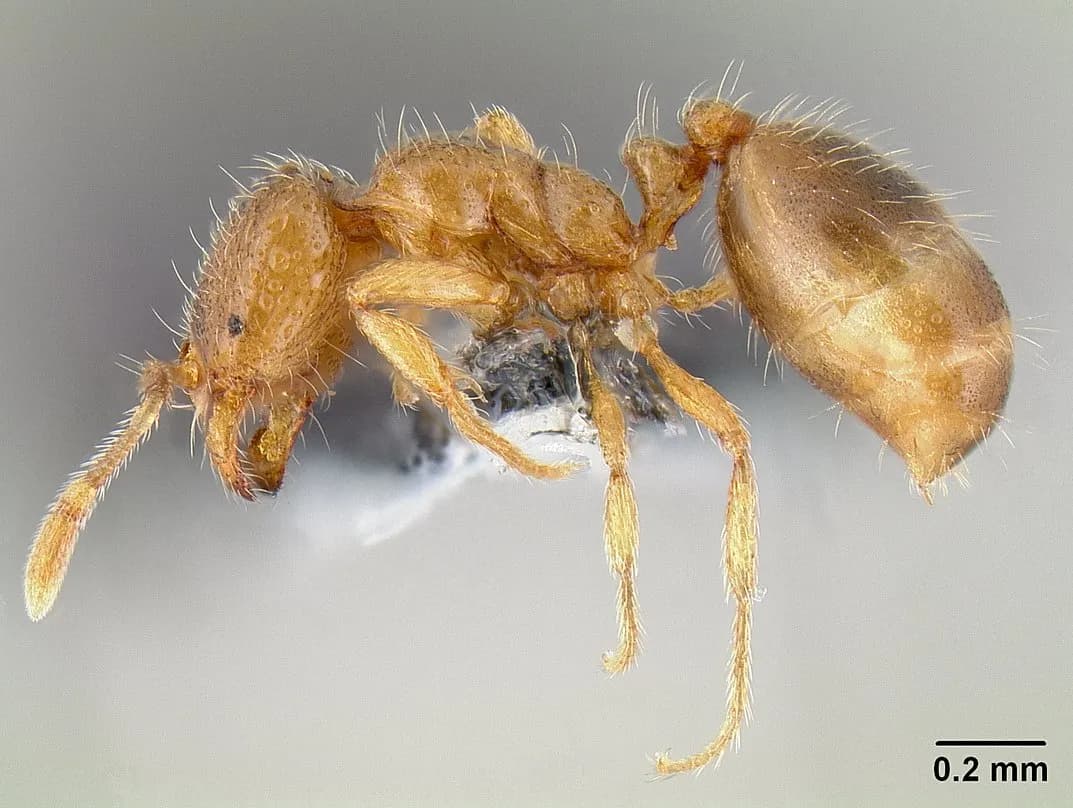
ID: Among the smallest house ants — easily mistaken for pharaoh ants. Yellowish to light brown, two nodes. Named for their habit of nesting near other ant colonies and stealing their food and larvae.
Threat level: LOW. Their tiny size lets them get into packaged food.
DIY or pro: DIY-friendly, but their size means sealing and sanitation matter as much as baiting.
12. Field ants
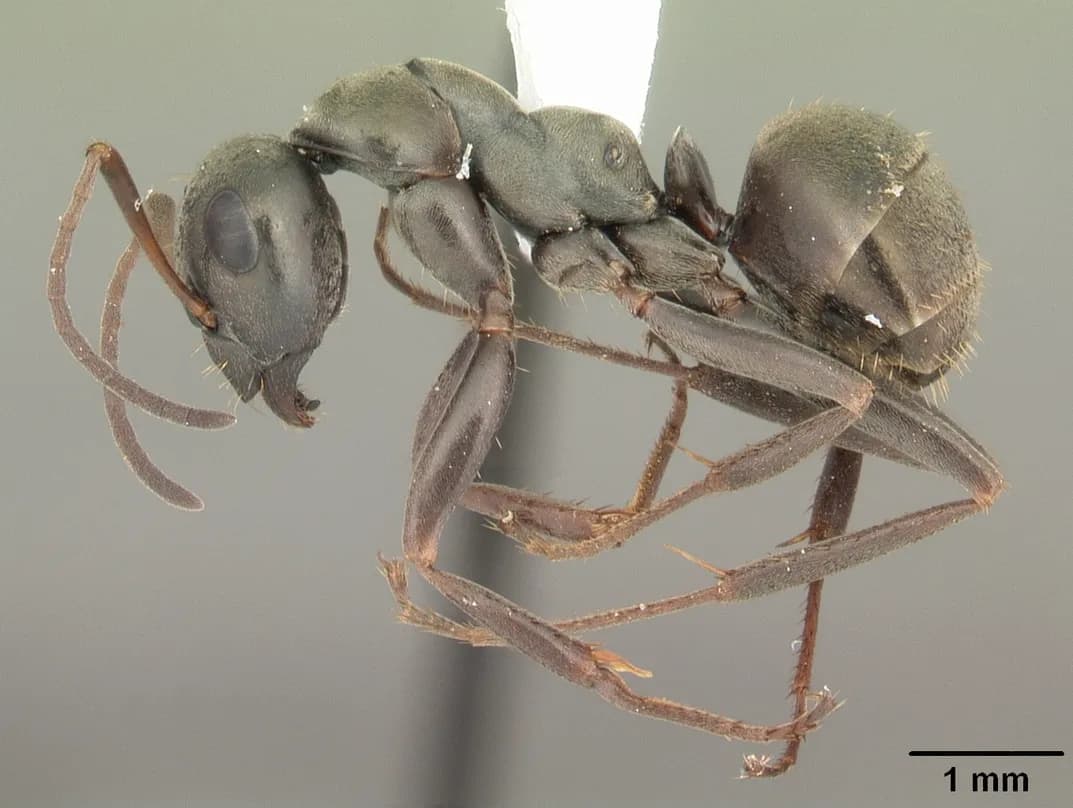
ID: Variable in color (black, brown, reddish), and often mistaken for carpenter ants — but field ants have an uneven, notched thorax profile where carpenter ants are smoothly rounded. One node.
Where they nest: Outdoors, in lawn mounds. They generally don't nest indoors but wander in to forage.
Threat level: LOW. Outdoor nuisance; large lawn mounds can interfere with mowing.
DIY or pro: DIY-friendly. Usually an outdoor treatment question, not a home-interior one.
When identification matters more than killing them
Here's the thing most people get backwards: with ants, the goal isn't to kill the ones you can see. The ones on your counter are foragers — a small fraction of the colony, and entirely replaceable. Wipe out today's trail and tomorrow's foragers take their place. The colony, and specifically the queen (or queens), is the actual target, and you can't treat what you haven't identified.
This is why species ID is the first move, not an academic exercise:
- Spray the wrong species and you make it worse. Pharaoh ants and several tramp ants bud and scatter when hit with repellent sprays. The single can of spray that works on pavement ants is the worst possible move against pharaoh ants.
- Bait selection depends on species. Carpenter ants are drawn to protein; odorous house ants want sweets. The wrong bait sits untouched.
- The nest location is a species trait. Knowing you have carpenter ants tells you to look in moist structural wood. Knowing you have fire ants tells you to look at sunny outdoor soil. Identification narrows the search from "somewhere in my house" to a specific, treatable location.
The carpenter ant mistake that costs the most
If there's one identification error worth avoiding, it's treating carpenter ants like a nuisance ant.
Because carpenter ant colonies grow slowly and the workers forage like any other ant, it's easy to assume the large black ants on your deck are just passing through. You knock down the ones you see, the trail thins out, and it feels resolved. Meanwhile, the actual nest — possibly inside a wall, possibly in a moist roof beam — keeps excavating galleries through your home's wood.
By the time carpenter ant damage becomes obvious, it has often been progressing quietly for a year or more. The repair isn't an ant problem at that point; it's a structural one. And because carpenter ants seek out wood that's already moist, an established infestation frequently points to a second hidden problem — a leak, poor drainage, or trapped humidity — that needs addressing alongside the ants.
That combination — slow timeline, hidden nest, and a moisture issue underneath — is exactly why carpenter ants are a professional inspection rather than a retail-spray project. A licensed technician can locate the actual nest (including satellite nests), confirm whether there's structural involvement, and identify the moisture source feeding it.
How to know what you've got
If you can identify your ant from the descriptions above and it's a Tier 2 or Tier 3 nuisance species, retail baits and good sanitation will often handle it. Place the right bait for the species along active trails, be patient (baits can take days to reach the colony), and resist the urge to spray the trail, which only interrupts the bait from getting home.
If you can't get a confident ID, if you're seeing large black ants and sawdust, if the ants reappear after baiting, or if you're dealing with anything that stings — that's the point where guessing gets expensive.
A free inspection from a licensed local pest control professional includes species identification. They'll confirm exactly what you're dealing with, locate the nest, and tell you honestly whether it's something you could have handled yourself or something that genuinely needed a pro. There's no cost to find out, and with the species that actually cause damage, finding out early is the entire game.
Find licensed ant control near you
Identified your ant — or just want a pro to confirm it and handle the nest? Pestcura connects you to licensed local exterminators offering free inspections:
- Ant control in Plano, TX
- Ant control in Arlington, TX
- Ant control in Dallas, TX
- Ant control in Houston, TX
- Ant control in San Antonio, TX
- Ant control in Phoenix, AZ
- Ant control hub — all cities
About the author
Eli Hartman writes about pest identification, treatment, and prevention for Pestcura. Content is reviewed against EPA guidance and current pest research before publication. Pestcura is a nationwide network connecting homeowners to licensed local pest control professionals.