Bee & Wasp Removal in Austin, TX
Talk to a local Austin bee and wasp exterminator now. Fast response, free quotes, stinging insects handled by licensed pros.
The longer you wait, the worse it gets.
Free referral — calls connect to a licensed local provider.
- Licensed local operators
- Free inspection
- Available 24/7
- No obligation
How it works
- 1
Call now
Talk to a local licensed technician — no menus, no hold music.
- 2
Free inspection
Honest assessment of what you're dealing with and what treatment fits.
- 3
Fast scheduling
Most appointments confirmed within 24 hours; same-day available when operators have capacity.
Why call us for bee & wasp removal in Austin?
Local technicians
Licensed pros who know Austin homes and which stinging insect species are active in Texas.
Free inspection
No-cost, no-obligation home assessment. You see exactly what's going on before any treatment is scheduled.
Fast scheduling
Most Austin appointments are confirmed within 24 hours. Same-day often available depending on operator capacity in your area.
Treatment guarantees
If the problem returns inside the warranty period, your provider re-treats at no charge.
Why this matters
The cost of waiting on stinging insects
Bees, wasps, hornets, and yellow jackets cause more emergency room visits than any other household pest — anaphylaxis risk, swarm response when nests are disturbed, and aggressive defense of nests near doorways and decks. Licensed local operators treat all stinging insects with safety and pollinator awareness, using professional-grade equipment for nest assessment, treatment, and removal.
If you've spotted a nest near a doorway, deck, attic, or play area — call now. Wasps complete structurally significant nests within 7-10 days, and removal cost climbs sharply once a nest is mature. Stings near children or anyone with allergies are a medical emergency, not a maintenance issue.
Free referral — calls connect to a licensed local provider.
- Stings can trigger anaphylaxis; severe reactions require emergency epinephrine and ER visits
- Disturbed nests produce swarm responses — single incidents of 50-100 stings are documented
- Carpenter bees damage wooden structures (deck rails, eaves, fascia) progressively over multiple seasons
- Yellow jacket nests in wall voids or ground holes are often missed until accidentally disturbed
Reference: EPA: Integrated Pest Management for Bees and Wasps (U.S. Environmental Protection Agency).
Bee & Wasp Removal services in Austin
Local technicians handle every common stinging insect situation in Austin, from quick spot treatments to full-home elimination programs.
Bee & Wasp Removal in Austin
Bees, wasps, hornets, and yellow jackets cause more emergency room visits than any other household pest — anaphylaxis risk, swarm response when nests are disturbed, and aggressive defense of nests near doorways and decks. Licensed local operators treat all stinging insects with safety and pollinator awareness, using professional-grade equipment for nest assessment, treatment, and removal.
Common species treated
- Paper wasps (Polistes spp.)
- Yellow jackets (Vespula spp.)
- Bald-faced hornets (Dolichovespula maculata)
- European hornets (Vespa crabro)
- Carpenter bees (Xylocopa spp.)
- Honey bees (Apis mellifera)
Starting price
Starts as low as
$89
for single nest treatment
Final cost depends on home size, infestation severity, and treatment method. Free inspection determines exact pricing — no obligation to book. See FAQ below for details.
Bee & Wasp Removal for Austin, TX homeowners
Across Austin — from Downtown to Cedar Park — homeowners face real stinging insect pressure. Austin's climate — long humid summers and mild winters extend the breeding season for most pests — combined with Austin's housing density and landscaping creates the kind of conditions stinging insects thrive in. Local technicians know which species are most active in Texas, where they harbor in homes built for this region, and what treatment approach delivers lasting results in Austin's specific environment.
What makes Austin different
Austin's hill country geography and rapid suburban expansion put homes against natural pest habitats. Carpenter ants, scorpions, and fire ants are common alongside Eastern subterranean termites. Austin's tech-driven housing growth means many newer homes have less mature landscaping that initially reduces some pest pressure — but as developments in Round Rock and Cedar Park age, termite and rodent calls climb steadily as wood frames mature and irrigation systems establish termite-friendly conditions.
Stinging insects in Austin: what to know
Pest pressure in Austin is shaped by long humid summers and mild winters extend the breeding season for most pests. The top issues for Austin homeowners are: Termites (Eastern subterranean), Mosquitoes, Cockroaches. Termite swarm season runs March-May, mosquitoes peak June-September, and cockroach activity is heaviest in summer — but mild winters mean no pest is fully dormant any month of the year.
Top pest pressures in the Austin area
- Termites (Eastern subterranean)
- Mosquitoes
- Cockroaches
- Fire ants
Licensing & regulation in Texas
In Texas, structural pest control is regulated by the Texas Department of Agriculture, Structural Pest Control Service (TDA-SPCS) under Texas Occupations Code Chapter 1951. Technicians complete 8 hours of classroom training and 40 hours of supervised on-the-job training as a licensed Apprentice in each pest category. Certified commercial applicators add 20 hours of classroom training in general pest control standards and a minimum 6 months of work experience. Texas requires separate certification for each pest category — termite/wood-destroying, general pest, and lawn — and continuing education must include at least one credit in laws, safety, environmental protection, or integrated pest management every cycle. Any technician treating your Austin home should be able to confirm their certification in writing — a licensed local pro will welcome the question.
Service areas around Austin
Downtown • South Congress • East Austin • Round Rock • Cedar Park
Common stinging insects in Austin
Stinging insect pressure in Austin runs nearly year-round due to mild winters and high humidity. Both native species and aggressive non-native bees and wasps are well-established across the metro.
Yellow jackets
Yellow jackets are the most aggressive stinging insect in Austin and the leading cause of stinging emergencies. Ground-nesting and wall-void colonies build to 4,000-5,000 workers by late summer, and Austin's extended warm season means colony activity persists later into fall than in northern markets. Wall-void colonies near interior living spaces produce some of the most dangerous residential stinging situations operators see — professional dust-formulation treatment is the only reliable approach.
Paper wasps
Paper wasps build umbrella-shaped nests under eaves, on porch ceilings, and around door frames throughout Austin. Several species are common across the region — northern paper wasps, red paper wasps, and the larger Polistes major in coastal areas. Single-nest treatment of an accessible paper wasp nest typically starts at $89.
Carpenter bees
Carpenter bees bore round 1/2-inch holes into unpainted wood across Austin's woodframe homes, particularly older structures with exposed cedar or pine fascia, deck rails, and pergolas. The region's humidity speeds wood weathering, which increases carpenter bee susceptibility. Treatment runs $150-$300 for typical residential bore-hole work plus structural sealing.
Bald-faced hornets
Bald-faced hornets build large football-shaped paper nests in Austin's mature trees and on building exteriors. Aggressive within 25 feet of the nest, they require careful professional treatment, often with extension equipment for high nests.
Frequently asked questions about bee & wasp removal in Austin
How do I know if I have wasps, hornets, or honey bees?
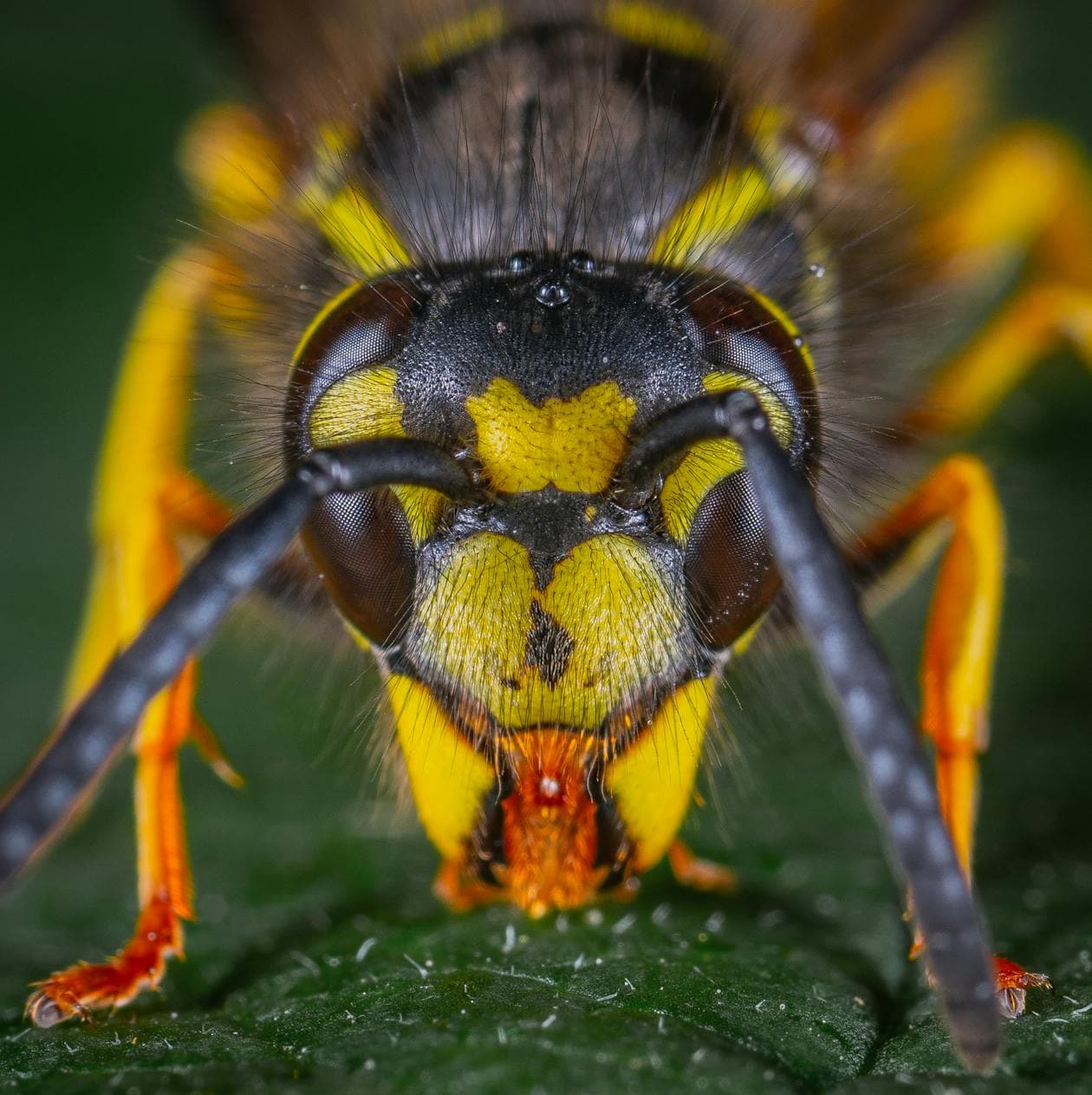
Look at body shape, color, and nest. Wasps and hornets are slender with smooth narrow waists and long legs — typically yellow/black or black/white striped — and build paper nests with visible cells. Yellow jackets nest in ground holes or wall voids and are aggressive scavengers. Honey bees are fuzzy and golden-brown, smaller, and build hexagonal wax combs. Carpenter bees are large, fuzzy, and look almost identical to bumble bees but bore round 1/2-inch holes into wooden structures. The free inspection identifies the species and determines the safest treatment approach for your situation.
Why is DIY wasp treatment dangerous?
Hardware-store sprays often kill some workers but leave the queen and brood, which produces a more aggressive rebuilt colony within days. Treating nests at night reduces immediate sting risk but creates ladder-and-spray-can-in-the-dark scenarios that produce serious injuries every year. Yellow jacket wall-void nests can't be effectively treated with surface spray — they require dust formulations injected into the void using professional equipment. The combined risk of incomplete elimination plus personal injury makes DIY wasp/hornet treatment one of the worst-outcome DIY pest control attempts homeowners make.
What if it's actually honey bees and not wasps?
Licensed pest control operators handle bees, wasps, hornets, and yellow jackets. The operator will inspect, identify the species, and recommend the safest, most effective approach — which may include relocation when appropriate, especially for honey bees. Don't try to identify the species yourself before calling. Just call and let the operator inspect.
How much does bee and wasp removal cost?
Stinging insect removal starts as low as $89 for single nest treatment of an accessible exposed nest. Final cost depends on nest accessibility (eave vs. wall void vs. ground), species (yellow jackets in walls require more involved treatment than paper wasps on a porch), height of nest, and whether multiple nests are present. Most jobs fall well below what homeowners expect. Wall-void yellow jacket treatment typically runs $200-$400; bald-faced hornet nests in tall trees run higher; carpenter bee treatment runs $150-$300 plus structural sealing. Your free inspection determines exact pricing before any work is scheduled — no obligation to book.
How fast can someone come out for a stinging insect emergency?
For active stinging emergencies — visible nest near a doorway during peak season, repeated stings happening in or near the home, or any household member with a known venom allergy — most service areas offer same-day or next-morning inspection and treatment. For standard situations like a single paper wasp nest on a back fence, a regular scheduled appointment without emergency premium is appropriate. Call to confirm response time for your specific situation.
Will the nest come back next season?
Returning queens often rebuild on the same site, so removing the old nest after treatment is part of long-term prevention. Without ongoing prevention, yellow jacket and paper wasp activity tends to return year after year in homes with favorable nesting conditions (sheltered eaves, ground burrows, wall void access points). Sealing entry points to wall voids, removing old nests, and quarterly perimeter pest control treatments materially reduce repeat infestations. Homes with previous severe stinging insect problems often opt for recurring service.
Other bee & wasp removal service areas
Bee & Wasp Removal is available across our network in Austin and surrounding regional cities. Operators in each area treat the same stinging insect pressures.
Other pest services in Austin
Dealing with more than one pest issue at the same address? Local operators in Austin treat the full range.
Pest Control in Austin
From termites and rodents to bed bugs and roaches — every pest has a different treatment, and getting it wrong wastes money. Local pros identify what you're dealing with and treat it right the first time.
See pest control →
Local termite inspectors in Austin
Termites cause more damage to U.S. homes every year than fires and storms combined. Most homeowners insurance does not cover the repairs.
See termite control →
Austin bed bug exterminators
Bed bugs spread fast and survive without feeding for over a year. DIY treatments almost always fail and let the infestation grow worse.
See bed bug exterminator →
Rodent Control services for Austin homeowners
Rats and mice carry over 35 diseases, chew through electrical wiring (a leading cause of house fires), and reproduce fast. One pair can produce 2,000 descendants in a year.
See rodent control →
Mosquito Control in Austin
Mosquitoes carry West Nile virus, Zika, EEE, and dengue. Beyond disease risk, an active mosquito population makes your yard unusable from dusk until dawn.
See mosquito control →
Local cockroach exterminators in Austin
Cockroaches trigger asthma attacks, contaminate food with salmonella and E. coli, and reproduce so fast that for every one you see, dozens more are hidden in walls and appliances.
See cockroach extermination →
Austin ant exterminators
Most ant species are nuisance pests, but carpenter ants damage wood like termites and fire ants deliver painful stings. Killing the trail you see does nothing to the colony of 50,000+ underground.
See ant control →
Flea Control services for Austin homeowners
Flea infestations multiply fast and spread across the entire home — eggs and larvae embed in carpet fibers, upholstery, pet bedding, and yard soil long before adult fleas are visible on pets. Licensed local operators apply professional Insect Growth Regulators (IGRs) plus adulticides across all four life stages (eggs, larvae, pupae, adults) for elimination DIY treatments rarely achieve.
See flea control →
Ready to deal with your stinging insects in Austin?
Our network is answering calls right now. Free inspection, no obligation, available 24/7.
Free referral — calls connect to a licensed local provider.